

| Card Manufacturer | Churchman’s Cigarettes |
| Year | 1939 |
| Series | Kings Of Speed Speed |
| 2nd Series | |
| # Of Cards In Series | 50 |
| Card Size | T206 (Cigarette Card) 1 7⁄16 by 2 5⁄8 inches (3.7 cm × 6.7 cm) |
One of the most coveted sets in the collection of British Cigarette Cards enthusiasts is undeniably this particular set. Considered a must-have for any serious collector, its enduring popularity is a testament to its exceptional appeal. Despite the considerable number of sets available in relatively good condition, this particular set has notably maintained a steady and impressive value over the years. Although acquiring a complete set in good condition may cost around $30, making it a relatively affordable option, it’s noteworthy that the value of the entire collection is significantly driven by just two cards – those featuring Howard Hughes and Jesse Owens, which together account for a substantial 50% of the set’s overall value. Additionally, collectors highly prize two other cards in the set, belonging to Harold Vanerbuilt and Sir Malcom Campbell, further adding to its desirability and allure.
Each card features a striking photo portrayal of a renowned athlete or innovator who held the title of the fastest in their sport during their time. These cards stand out for their focus on the individuals rather than the equipment or specific sport, making them particularly captivating. Despite their lack of flamboyance, these black and white photo cards with brief descriptions on the reverse side are cherished for their artistic simplicity. However, their white card stock makes them prone to staining and accumulating dirt and grime, also known issues with alignment and color fading detract from their overall appeal.
What do you think of this set of cards?
1
John Cobb
John Cobb was the first man to travel at 350 m.p.h. on land. He achieved this at Bonneville Salt Flats, Utah, on Sept. 15th, 1938. It was a world record, which he held for 24 hrs. until Captain G. E. T. Eyston put the speed up by over 7 miles an hour (see Card No. 11). Cobb is 39 years of age. Like Captain Eyston he is a motoring giant, standing 6 ft. 2 in. in height and weighing 16 stone. He took up motoring at Cambridge and was introduced to racing by the late Parry Thomas. By profession he is a fur broker.
No Variations
No Error Cards Reported
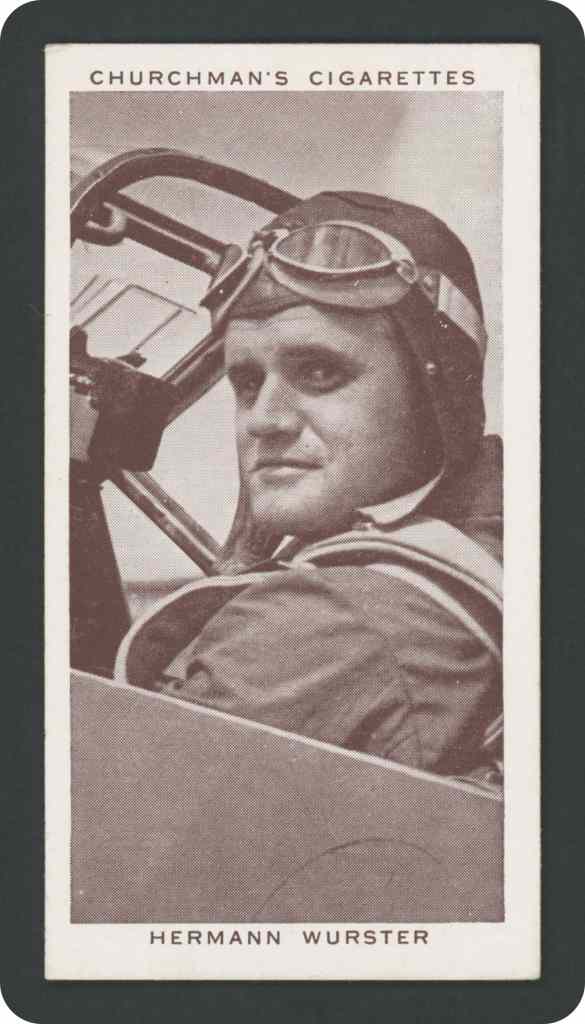
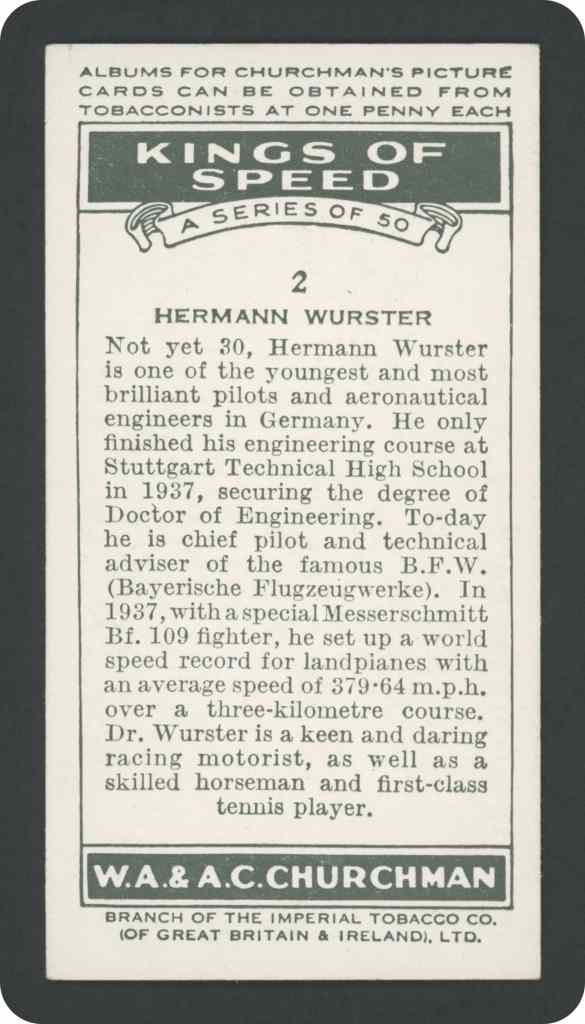
2
Hermann Wurster
Not yet 30, Hermann Wurster is one the yougest and most brilliant pilots and aeronautical engineers in Germany. He only finished his engineering course ar Struttgart Technical Hish School in 1937. Securing the degree of Doctor of Engineering. To-day he is chief pilot and technical advisor of the famouse B/F.W (bayerische Flugzeugwerke). In 1937, with a special Messerchmirr BF. 109 fighter, he set up a world speed record for landpianes with an average speed of 379*64 m.p.h. over a three-kilometre course. Dr. Wurster is a keen and daring racing motorist, as well as a skilled horseman and first-class tennis player.
No Variations
No Error Cards Reported
3
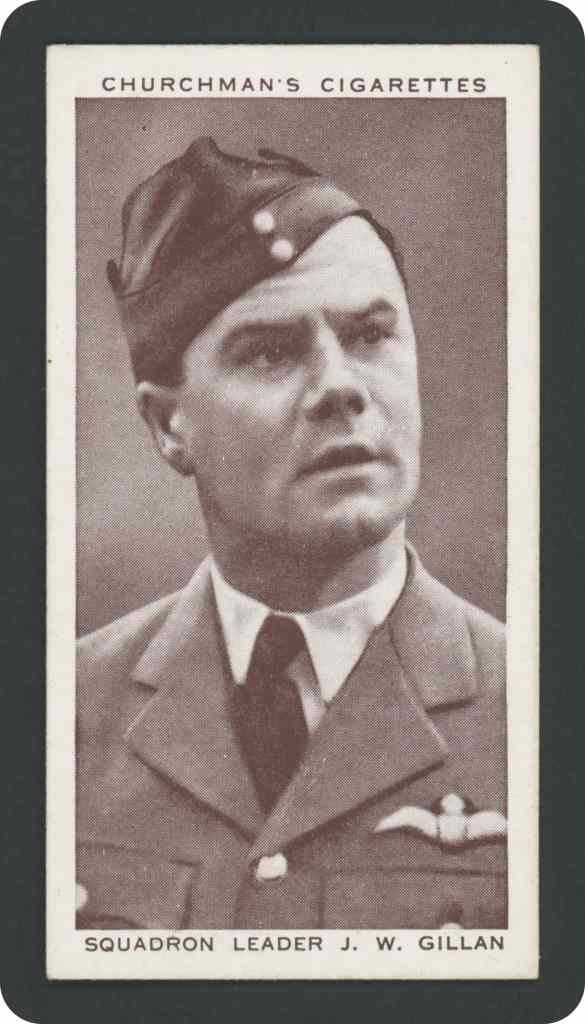
Squadron Leader J. W. Gillan
Squadron Leader John Woodburn Gillan is the 31-year-old son of a Royal Air Force chaplain. On Feb. 10th, 1938, he flew a Hawker “Hurricane’ service machine from Edinburgh to Northolt (Middlesex)-a distance of 327 miles–in 48 mins., equalling an average speed of 408:7 m.ph. (The ‘plane was assisted by an 80 m.p.h. tail wind and this speed does not count as a record.) Known as “Gillo’ to his comrades of No. 111 (Fighter) Squad-ron, which he commands, Gillan has seen service in the Far East and Mediterranean and has been Instructor at Cranwell–the” Sandhurst ,” of the R.A.F. – and the Central Flying School.
No Variations
No Error Cards Reported
4
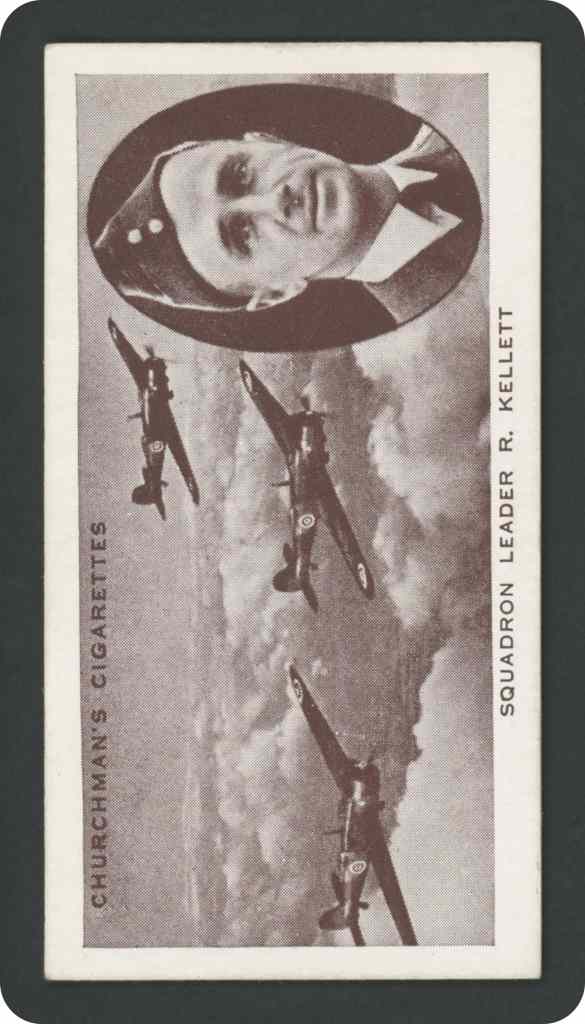
Squadron Leader R. Kellett
Squadron Leader Kellett was leader of the flight which won the world long-distance record for Great Britain, Nov., 1938. Flt.- Lieuts. Hogan and Combe were pilots of machines 2 and 3 respect-ively. The ‘planes, which were Vickers “Wellesley” bombers modified for long-distance flights, flew from Ismailia (Egypt) to Port Darwin (Australia), a dis-tance of 7,159 miles (Combe had to stop in the Netherlands East Indies to re-fuel, but even then he had broken the record by flying 6,658 miles non-stop). Kellett is a Devon man, 33 years of age, who, since being commissioned in the K.A.F in 1925, has seen a great deal of flying service in the Far and Near East.
No Variations
No Error Cards Reported
5
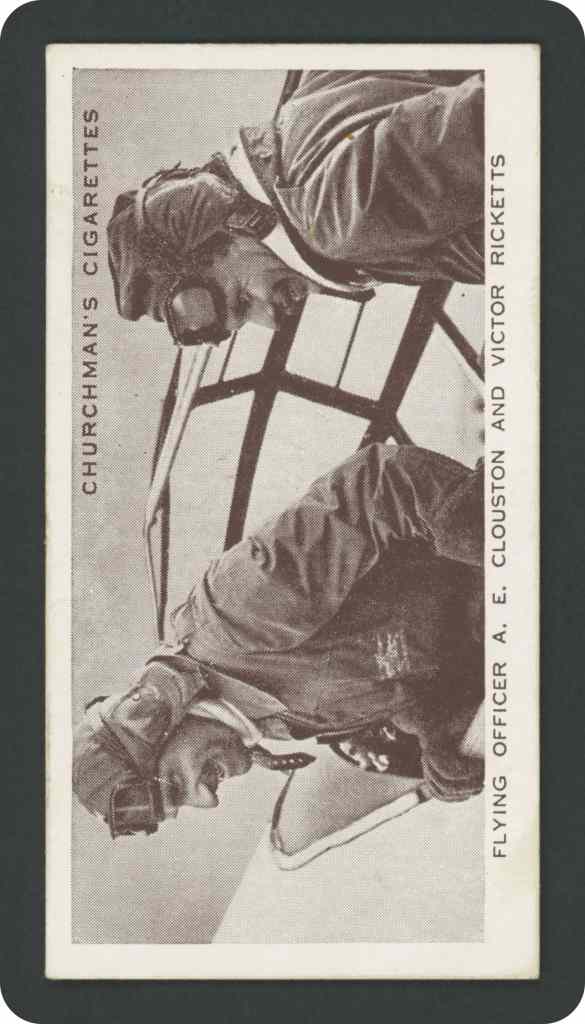
Flying Officer A. E. Clouston And Victor Rickets
Flying Officer Arthur Edmond Clouston and Mr. V. Ricketts made a record flight from England to New Zealand and back, a distance of approx. 24,000 miles, in 10 days 20 hrs. 48 mins., March, 1938. Flying Officer Clouston is 30 years of age and a New Zealander. He entered the R.A.F. with a short service commission but in 1935 transferred to the Reserve and became one of the first civilian test pilots at the Royal Aircraft Establishment, Farnborough. He has the unusual ability to fly at great heights without the aid of oxygen apparatus. Victor Ricketts is a journalist specializing in aviation.
No Variations
No Error Cards Reported
6
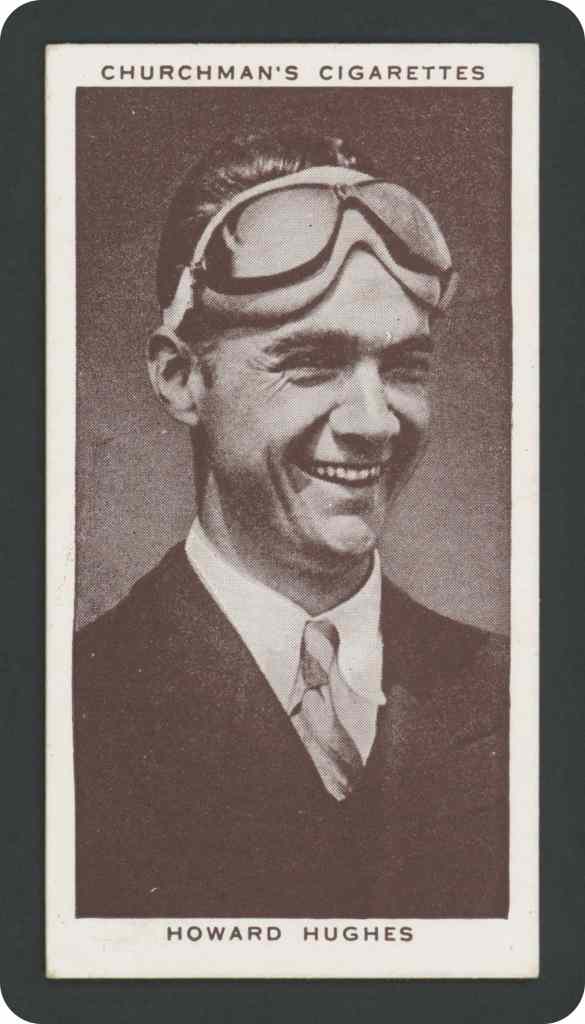
Howard Huges
In July, 1938, Howard Hughes, millionaire airman-film producer, with four companions, flew “round the world” in the record time of 3 days 19 hrs. 17 mins. (average speed, including stops, 163 m.p.h.). Born at Houston, Texas, in 1905, Howard Hughes is one of America’s most extraordinary young men. At 20 he inherited a £4,000,000 machinery-making business from his father and conducted it with great suc-cess. As a diversion from commerce he took up film making and, being interested in flying from the age of 16, produced the great aviation picture Hell’s Angels at a cost of £800,000.
No Variations
No Error Cards Reported
7
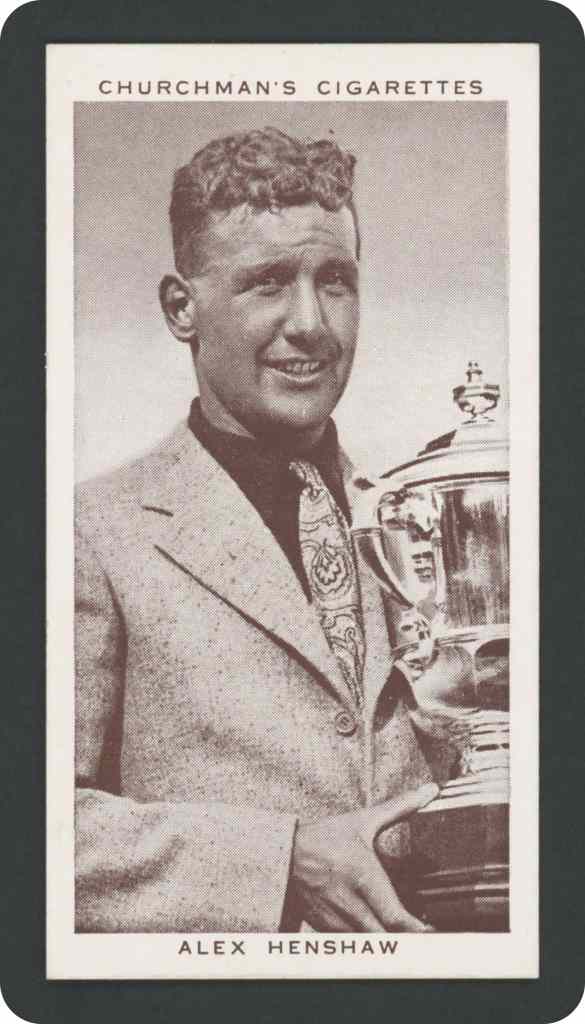
Alex Henshaw
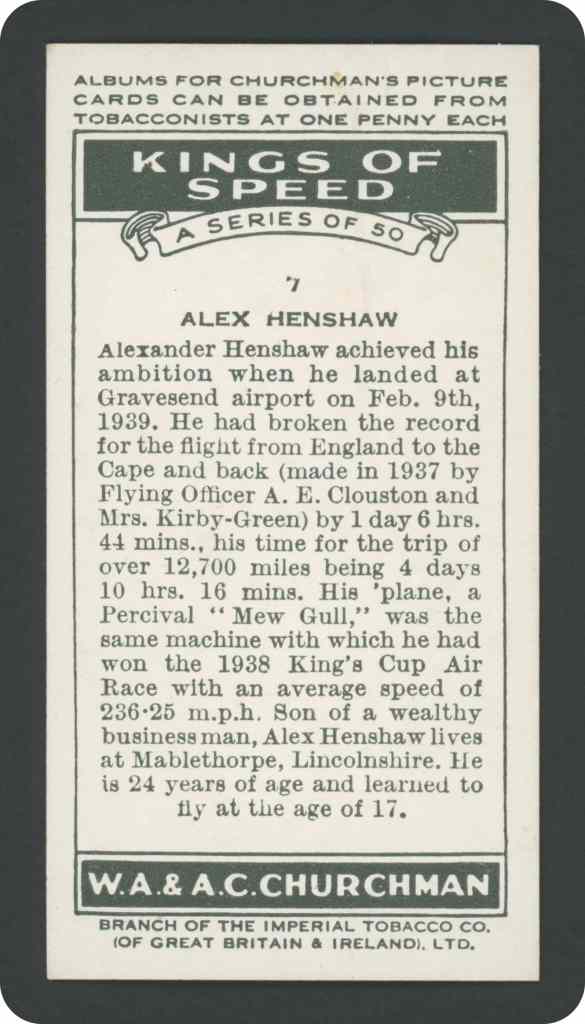
Alexander Henshaw achieved his ambition when he landed at Gravesend airport on Feb. 9th,1939. He had broken the record for the flight from England to the Cape and back (made in 1937 by Flying Officer A. E. Clouston and Mrs. Kirby- Green) by 1 day 6 hrs. 41 mins., his time for the trip of over 12,700 miles being 4 days 10 hrs. 16 mins. His ‘plane, a Percival “Mew Gull.” was the same machine with which he had won the 1938 King’s Cup Air Race with an average speed of 236•25 m.p.h. Son of a wealthy business man, Alex Henshaw lives at Mablethorpe, Lincolnshire. He is 24 years of age and learned to fly at the age of 17.
No Variations
No Error Cards Reported
8
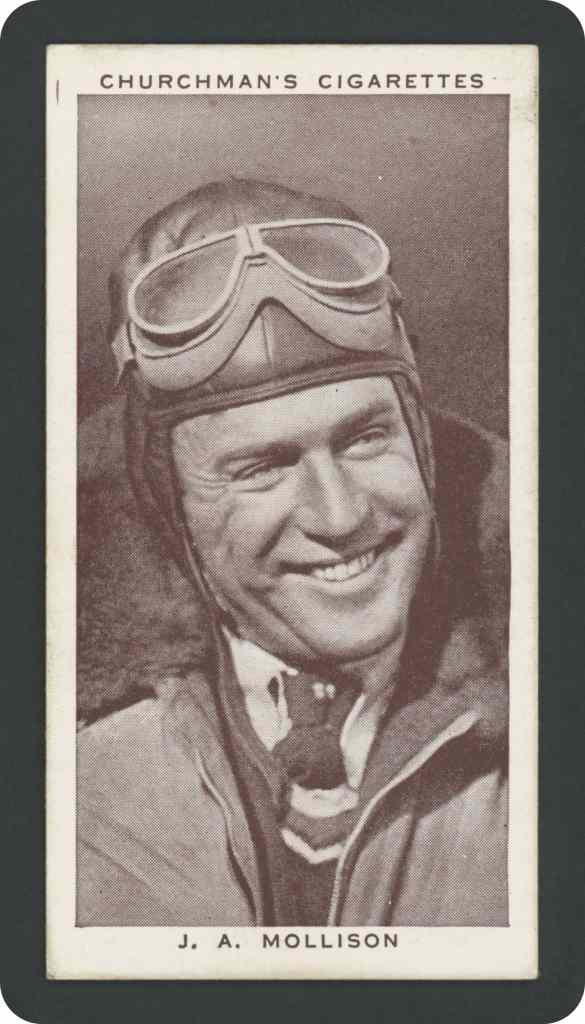
J. A. Mollison
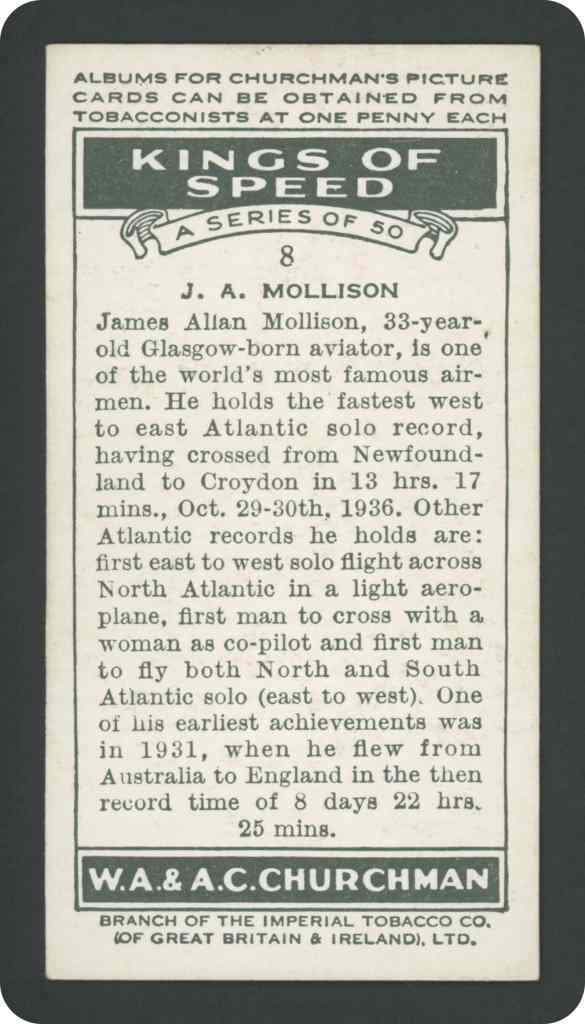
James Allan Mollison, 33-year-old Glasgow-born aviator, is one of the world’s most famous air-men. He holds the fastest west to east Atlantic solo record, having crossed from Newfoundland to Crovdon in 13 hrs. 17 mins., Oct. 29-30th, 1936. Other Atlantic records he holds are: first east to west solo flight across North Atlantic in a light aero-plane, first man to cross with a woman as co-pilot and first man to fly both North and South Atlantic solo (east to west). One of his earliest achievements was in 1931, when he flew from Australia to England in the then record time of 8 days 22 hrs. 25 mins.
No Variations
No Error Cards Reported
9
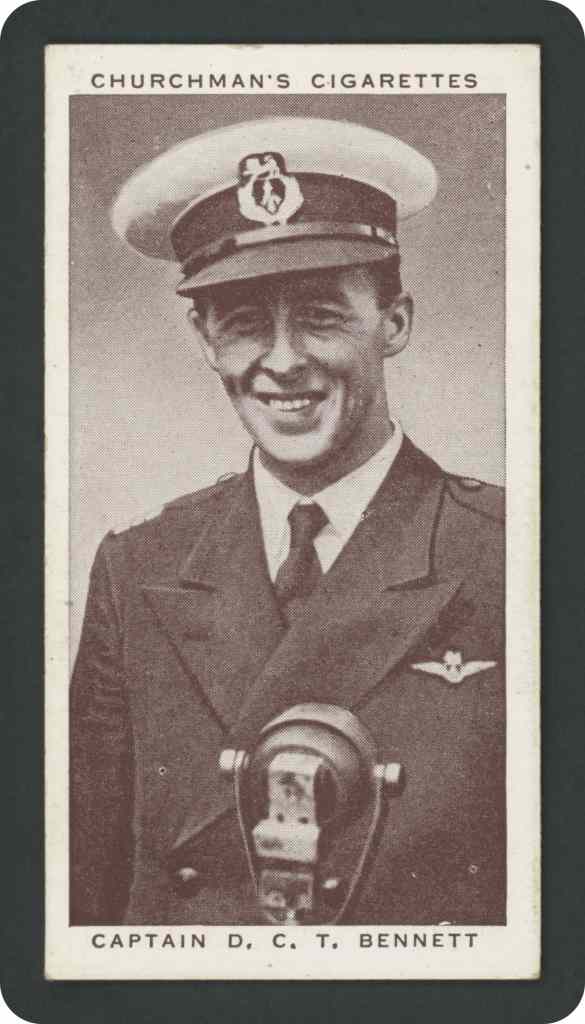
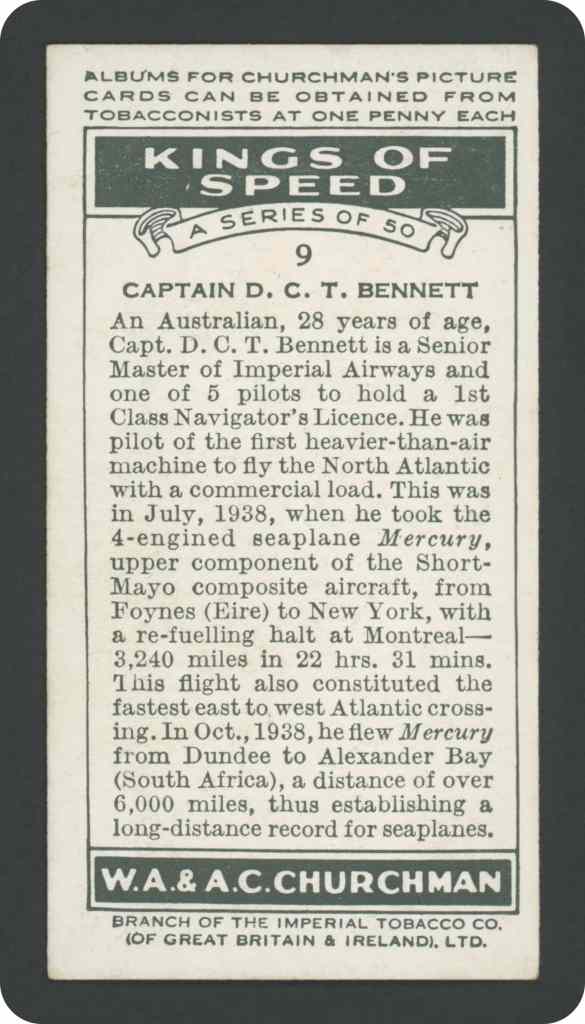
Captain D. C. T. Bennett
An Australian, 28 years of age, Capt. D. C. T. Bennett is a Senior Master of Imperial Airways and one of 5 pilots to hold a Ist Class Navigator’s Licence. He was pilot of the first heavier-than-air machine to fly the North Atlantic with a commercial load. This was in July, 1938, when he took the 4-engined seaplane Mercury, upper component of the Short-Mayo composite aircraft, from Foynes (Eire) to New York, with a re-fuelling halt at Montreal-3,240 miles in 22 hrs. 31 mins. This flight also constituted the fastest east to west Atlantic cross-ing. In Oct., 1938, he flew Mercury from Dundee to Alexander Bay (South Africa), a distance of over 6,000 miles, thus establishing a long-distance record for seaplanes.
No Variations
No Error Cards Reported
10
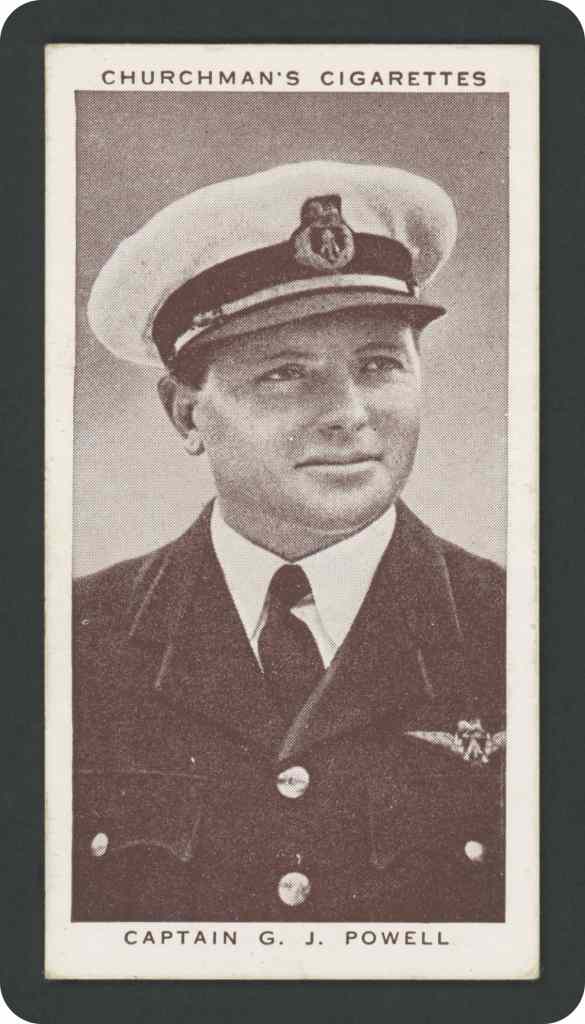
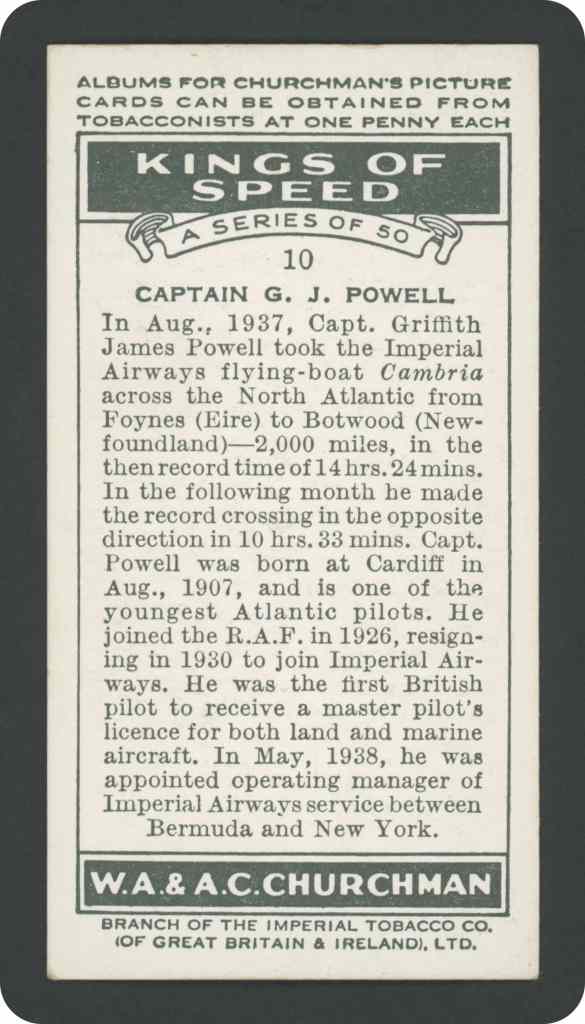
Captain G. J. Powell
In Aug., 1937, Capt. Griffith James Powell took the Imperial Airways flying-boat Cambria across the North Atlantic from Foynes (Eire) to Botwood (New-foundland) 2,000 miles, in the then record time of 14 hrs. 24 mins. In the following month he made the record crossing in the opposite direction in 10 hrs. 33 mins. Capt. Powell was born at Cardiff in Aug., 1907, and is one of the youngest Atlantic pilots. He joined the R.A.F. in 1926, resigning in 1930 to join Imperial Air-ways. He was the first British pilot to receive a master pilot’s licence for both land and marine aircraft. In May, 1938, he was appointed operating manager of Imperial Airwavs service between Bermuda and New York.
No Variations
No Error Cards Reported
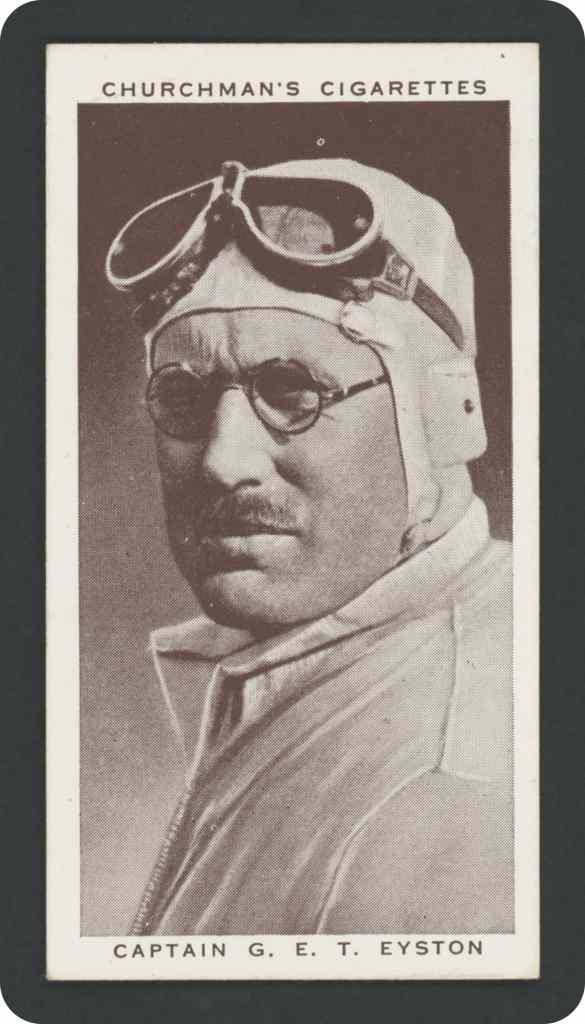
11
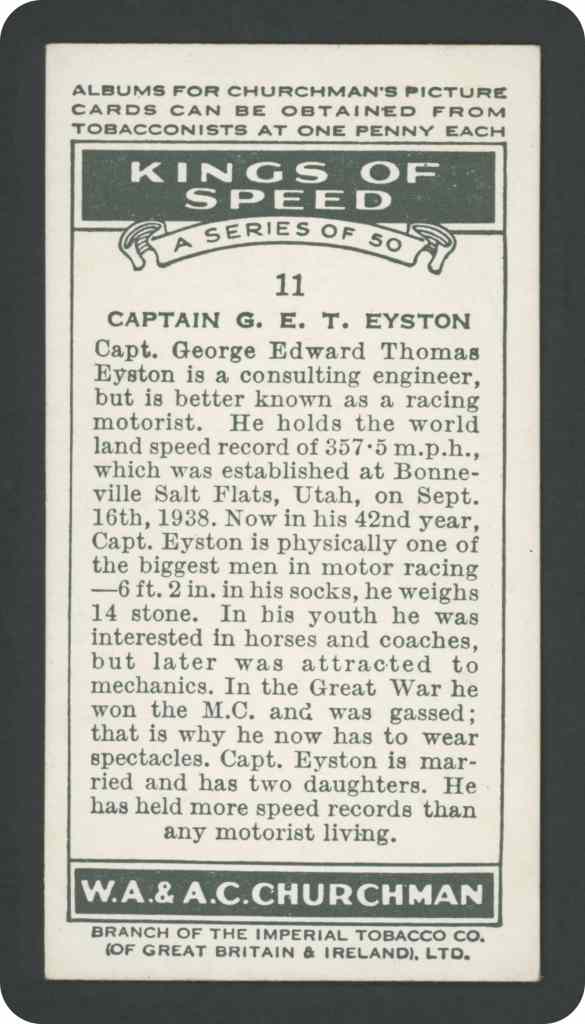
Captain G. E. T. Eyston
Capt. George Edward Thomas Eyston is a consulting engineer, but is better known as a racing motorist. He holds the world land speed record of 357:5 m.p.h., which was established at Bonne-ville Salt Flats, Utah, on Sept. 16th, 1938. Now in his 42nd year, Capt. Eyston is physically one of the biggest men in motor racing 6 ft. 2 in. in his socks, he weighs 14 stone. In his youth he was interested in horses and coaches, but later was attracted to mechanics. In the Great War he won the M.C. and was gassed; that is why he now has to wear spectacles. Capt. Eyston is married and has two daughters. He has held more speed records than any motorist living.
No Variations
No Error Cards Reported
12
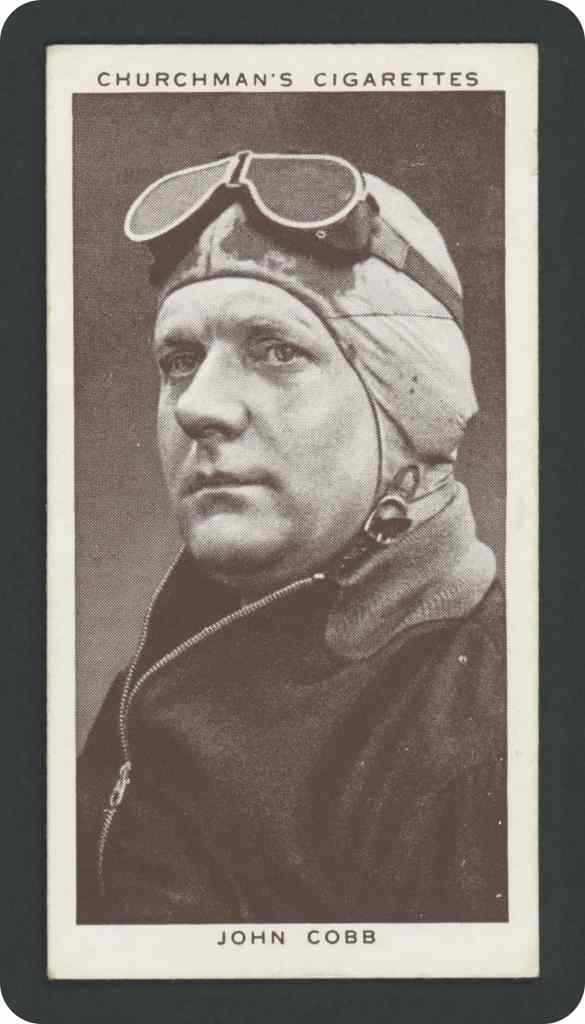
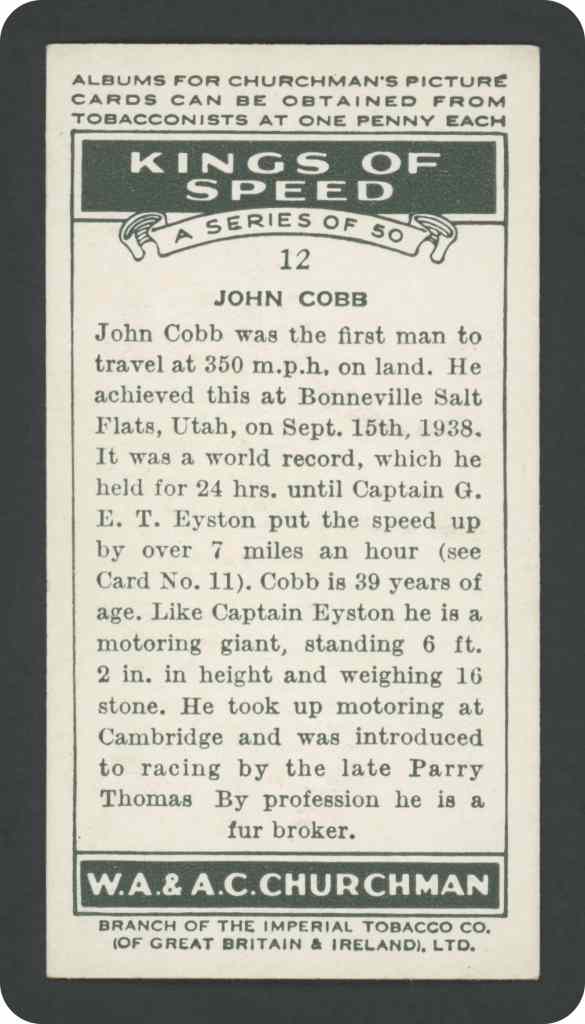
John Cobb
John Cobb was the first man to travel at 350 m.p.h. on land. He achieved this at Bonneville Salt Flats, Utah, on Sept. 15th, 1938. It was a world record, which he held for 24 hrs. until Captain G. E. T. Eyston put the speed up by over 7 miles an hour (see Card No. 11). Cobb is 39 years of age. Like Captain Eyston he is a motoring giant, standing 6 ft. 2 in. in height and weighing 16 stone. He took up motoring at Cambridge and was introduced to racing by the late Parry Thomas. By profession he is a fur broker.
No Variations
No Error Cards Reported
13
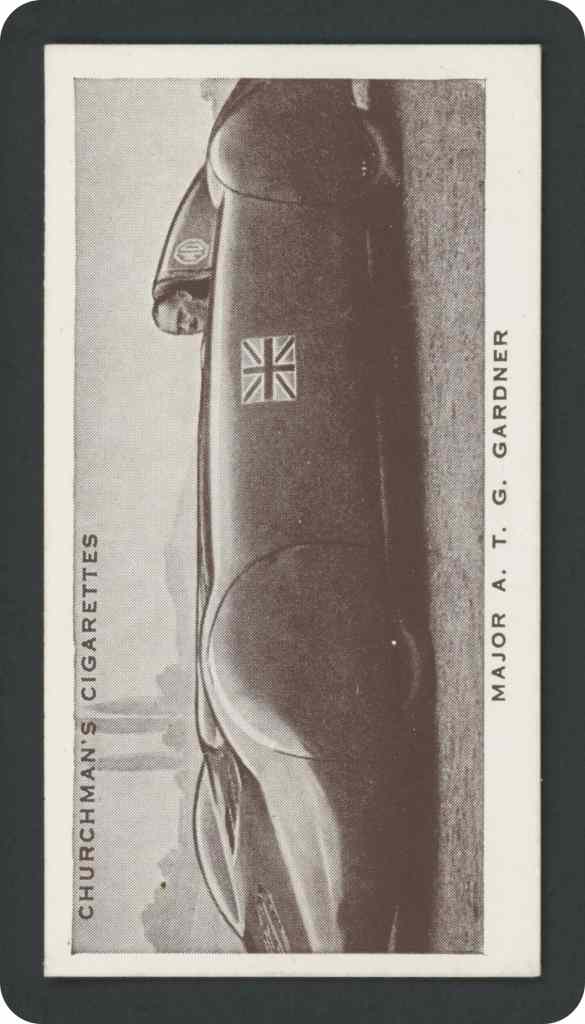
Major A. T. G. Gardner
Major A. T. G. Gardner is known as ” Goldie ” to all his friends. He was the first man to travel at over 150 m.ph. in a light car. In Nov., 1938, with a streamlined M.G. Magnette, he set up in Germany a world record of 186•6 m.p.h. for 750-1,100 c.c. (Class G) light cars, an achievement for which the British Racing Drivers’ Club awarded him its Gold Star. His racing achievements are all the more remarkable because he was wounded in the Great War. and has never fully recovered from a crippling injury which was accentuated by a bad crash in the 1932 R.A.C. Tourist Trophy Race in Ireland.
No Variations
No Error Cards Reported
14
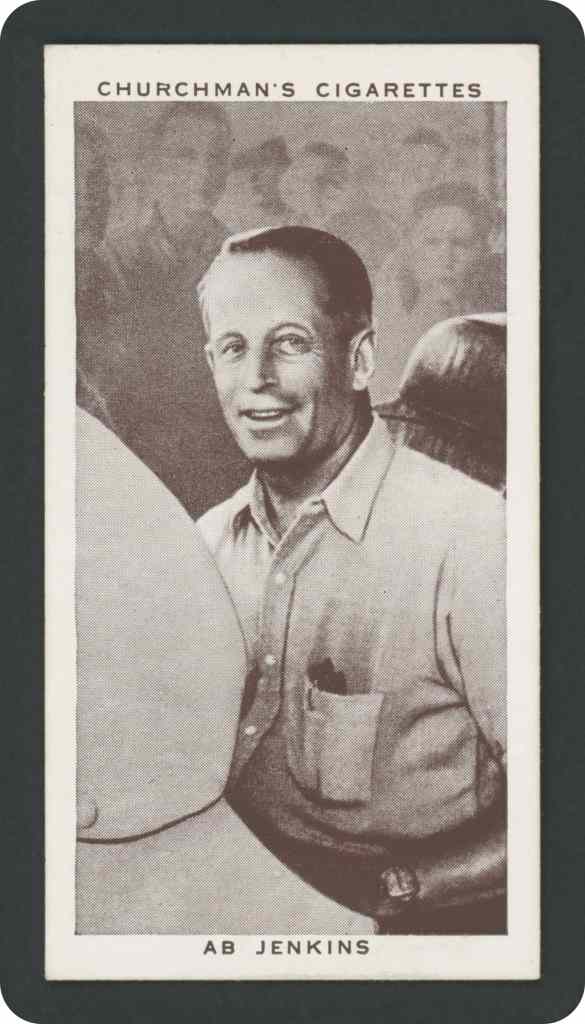
AB Jenkins
Ab Jenkins is motor racing ace of the United States. He holds many world distance records; one day early in Sept., 1937, he broke nine records and before the month was out, fourteen more, his successes. ranging from 50 kilometres to 24 hrs. Most of his spectacular successes have been achieved on Bonneville Salt Flats, Utah, with a car which, not inappropriately, he called Mormon Meteor. In 1939 he intends to try for the land speed record, now held by Capt. G. E. T. Eyston with 357:5 m.p.h. (see Card No. 11).
No Variations
No Error Cards Reported
15
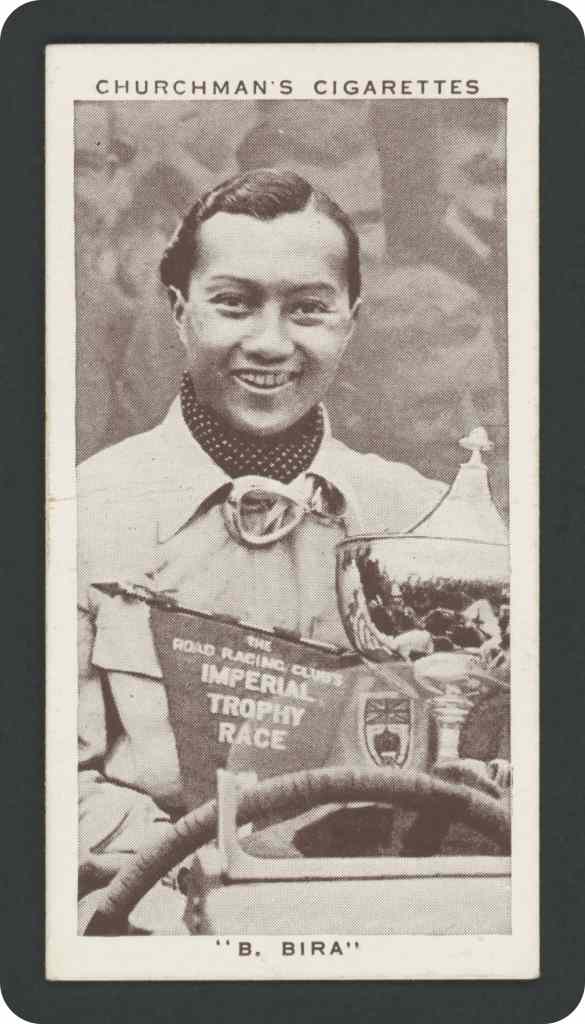
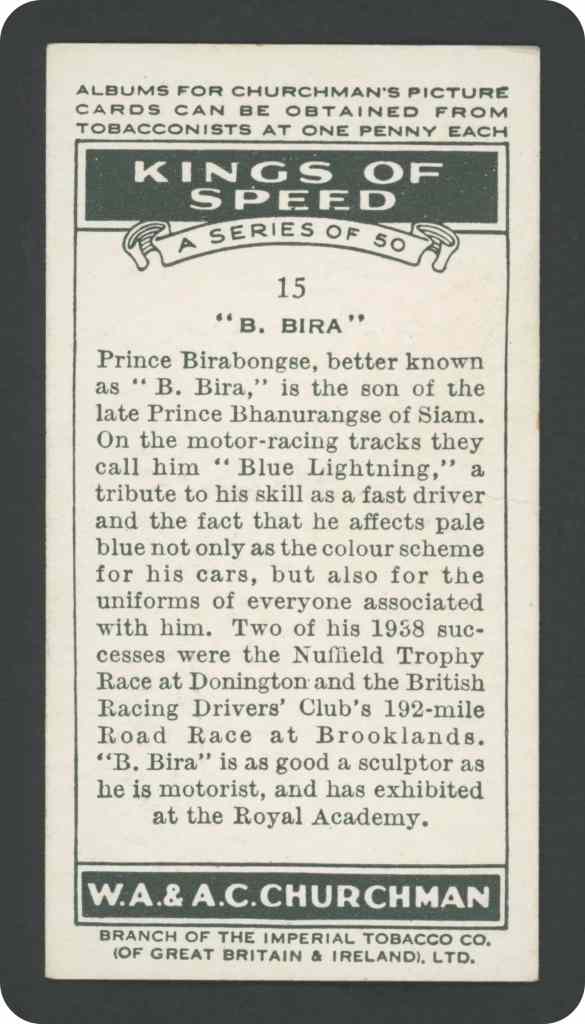
“B. Bira”
Prince Birabongse, better known as ” B. Bira,” is the son of the late Prince Bhanurangse of Siam. On the motor-racing tracks they call him ” Blue Lightning,” a tribute to his skill as a fast driver and the fact that he affects pale blue not only as the colour scheme for his cars. but also for the uniforms of everyone associated with him. Two of his 1938 successes were the Nuffield Trophy Race at Donington and the British Racing Drivers’ Club’s 192-mile Road Race at Brooklands. “B. Bira” is as good a sculptor as he is motorist, and has exhibited at the Royal Academy.
No Variations
No Error Cards Reported
16
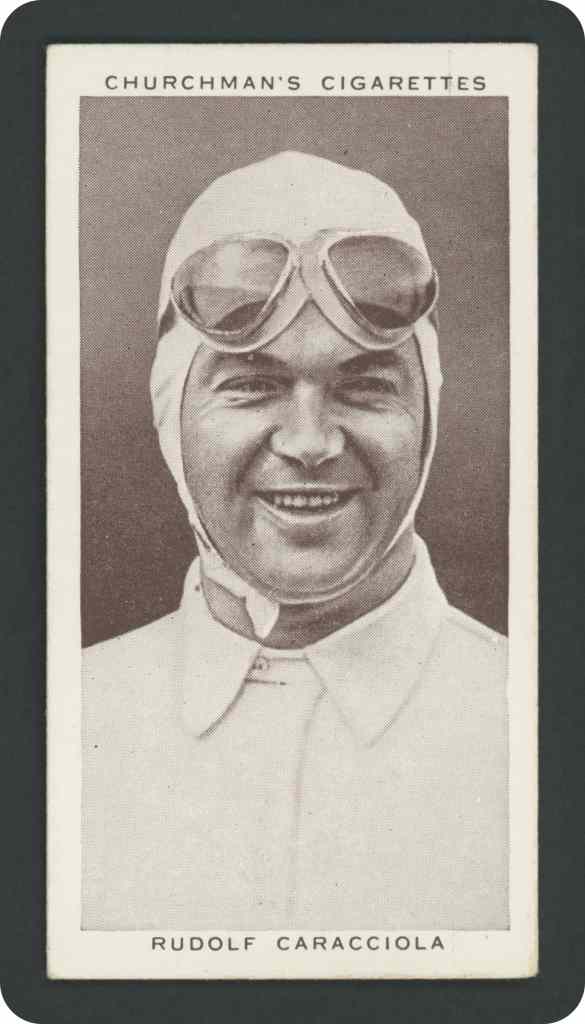
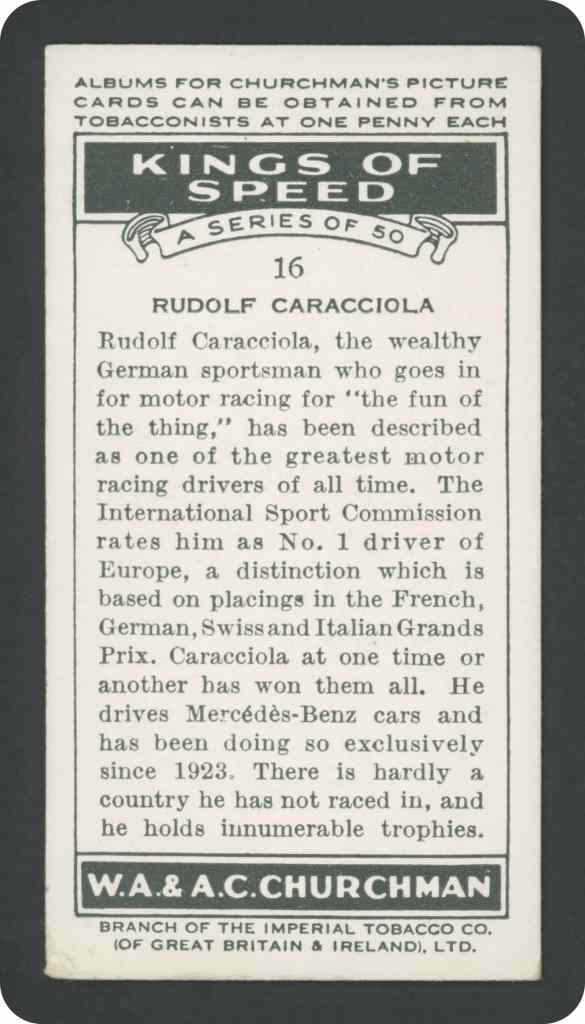
Rudolf Caraciola
Rudolf Caracciola, the wealthy German sportsman who goes in for motor racing for “the fun of the thing,” has been described as one of the greatest motor racing drivers of all time. The International Sport Commission rates him as No. 1 driver of Europe, a distinction which is based on placings in the French, German, Swissand Italian Grands Prix. Caracciola at one time or another has won them all. He drives Mercédès-Benz cars and has been doing so exclusively since 1923. There is hardly a country he has not raced in, and he holds innumerable trophies.
No Variations
No Error Cards Reported
17
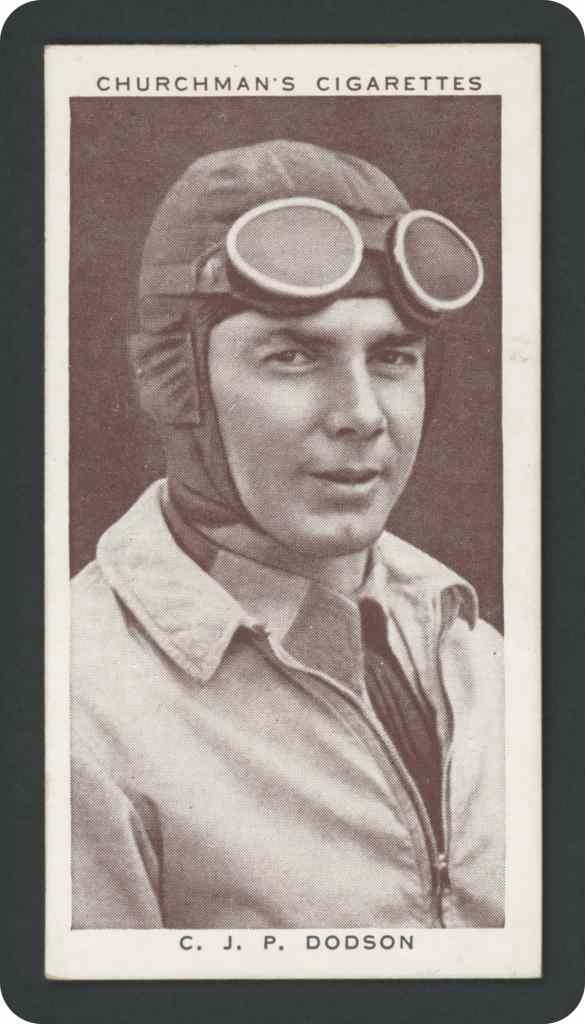
C. J. P. Dodson
Charlie Dodson won the British Empire Trophy Race at Doning-ton Park in April, 1938, driving a supercharged Austin Seven. He covered the 200-mile course in 2 hrs. 33 mins. 31 secs. at an average speed of 69-62 m.p.h. Dodson, who is in his early thirties, is one of the smallest British racing drivers. He started his career as a motor cyclist, his first appearance in a car race at Brook-lands being in April, 1934. In Oct., 1936, driving a 750 c.c. supercharged Austin on that track, he broke seven records from 1 mile to 10 miles (flying start).
No Variations
No Error Cards Reported
18
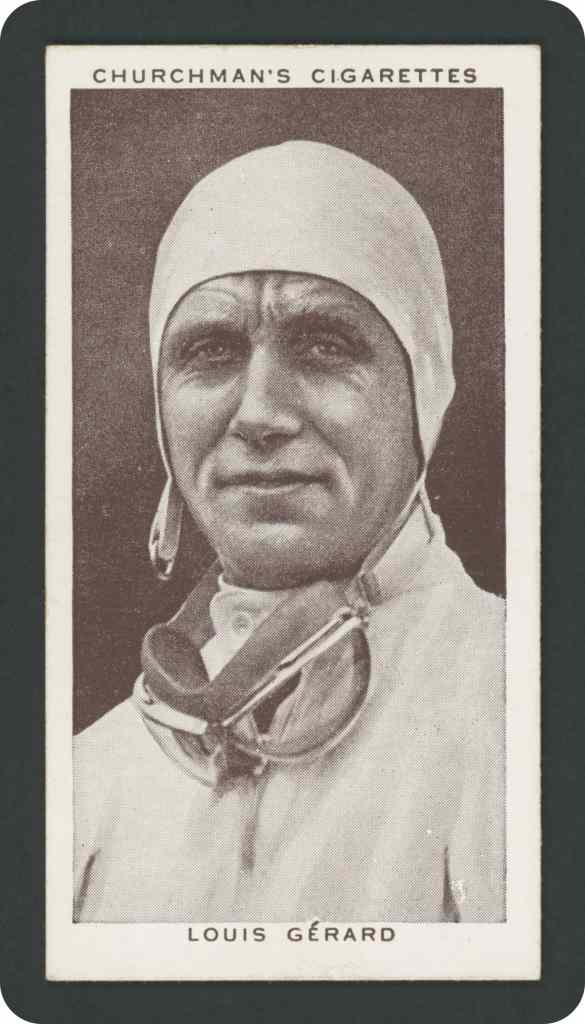
Louis Gerard
Louis Gérard is a young Frenchman who, like many other sportsmen, finds the peak of pleasure and excitement in motor racing. He has a high reputation as a driver in his own country, where he has innumerable successes to his credit. Only occasionally does he come to England, but when he does his performances are especially notable. At Donington Park, in Sept. 1938. driving a Delage, he won the 312-mile R.A.O. International Tourist Trophy Race with an average speed of 67•61 m.p.h. in 4 hrs. 31 mins. 50 secs.
No Variations
No Error Cards Reported
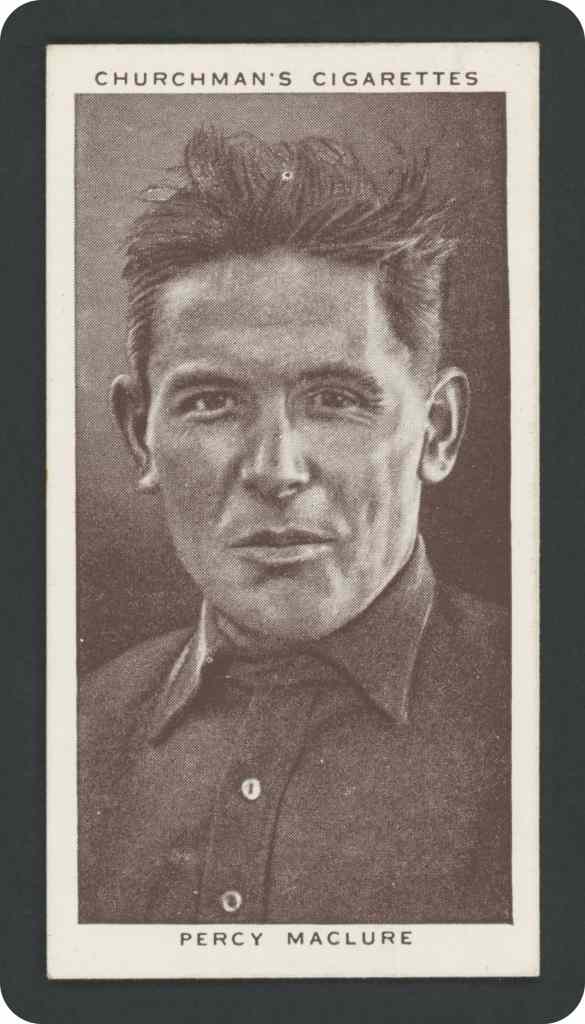
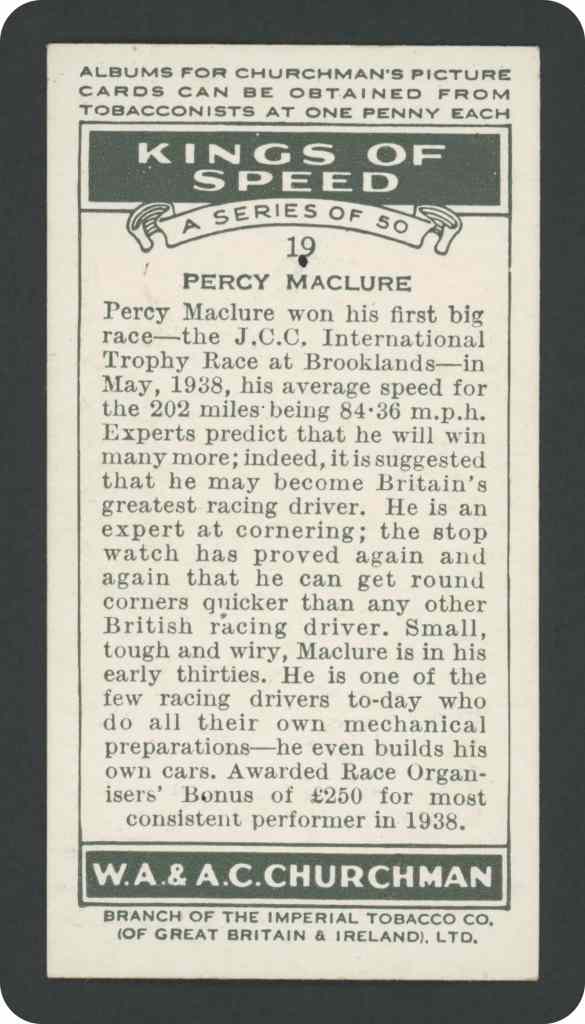
19
Percy Maclure
Percy Maclure won his first big race- -the J.C.C. International Trophy Race at Brooklands–in May, 1938, his average speed for the 202 miles being 84 36 m.p.h.Experts predict that he will win many more; indeed, it is suggested that he may become Britain’s greatest racing driver. He is an expert at cornering; the stop watch has proved again and again that he can get round corners quicker than any other British racing driver. Small, tough and wiry, Maclure is in his early thirties. He is one of the few racing drivers to-day who do all their own mechanical preparations- he even builds his own cars. Awarded Race Organ-isers’ Bonus of £250 for most consistent performer in 1938.
No Variations
No Error Cards Reported
20
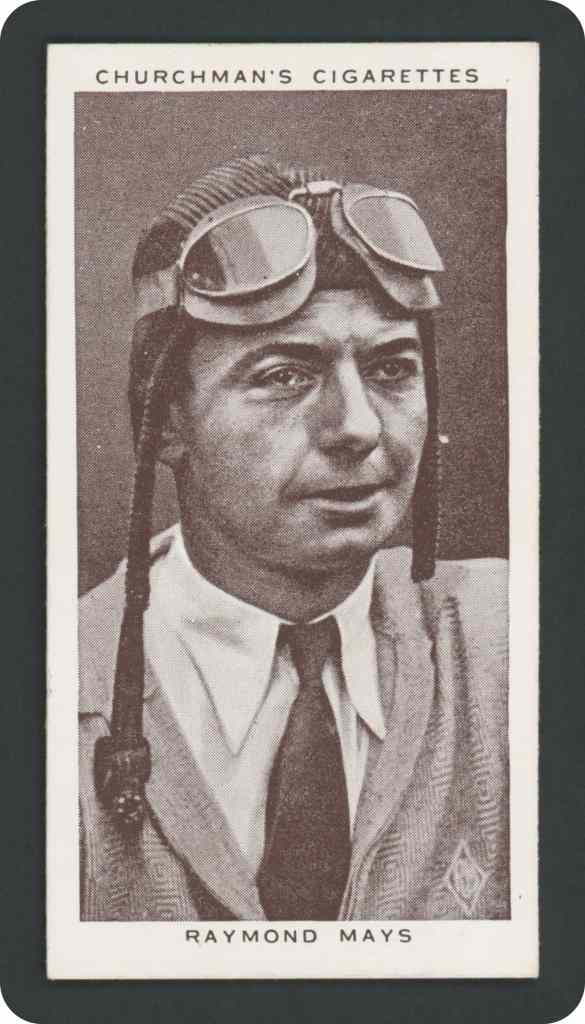
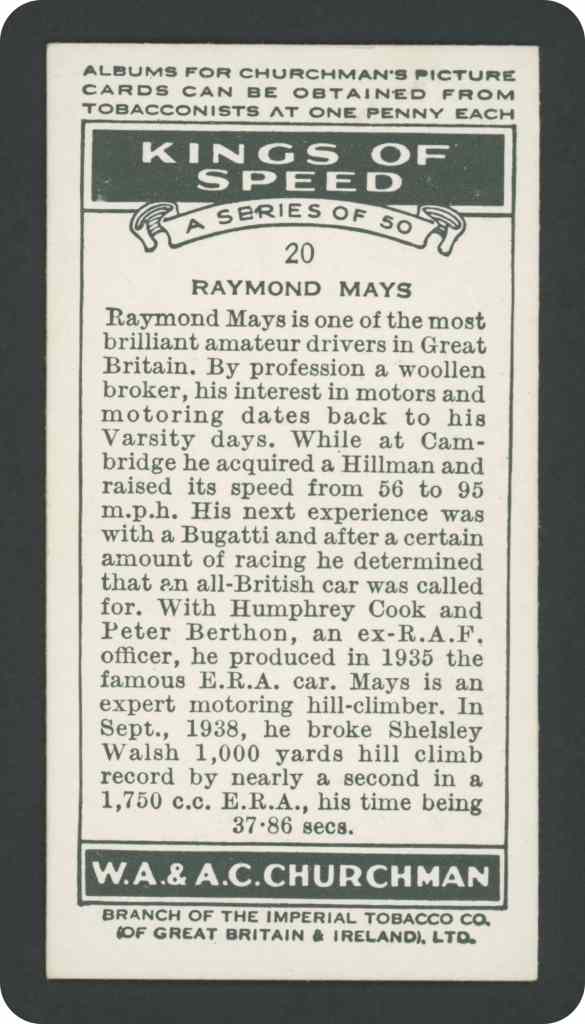
Raymond Mays
Raymond Mays is one of the most brilliant amateur drivers in Great Britain. By profession a woollen broker, his interest in motors and motoring dates back to his Varsity days. While at Cambridge he acquired a Hillman and raised its speed from 56 to 95 m.ph. His next experience was with a Bugatti and after a certain amount of racing he determined that an all-British car was called for. With Humphrey Cook and Feter Berthon, an ex-R.A.F. officer, he produced in 1935 the famous E.R.A. car. Mays is an expert motoring hill-climber. In Sept., 1938, he broke Shelsley Walsh 1,000 yards hill climb record by nearly a second in a 1,750 c.c. E.R.A., his time being 37•86 secs.
No Variations
No Error Cards Reported
21
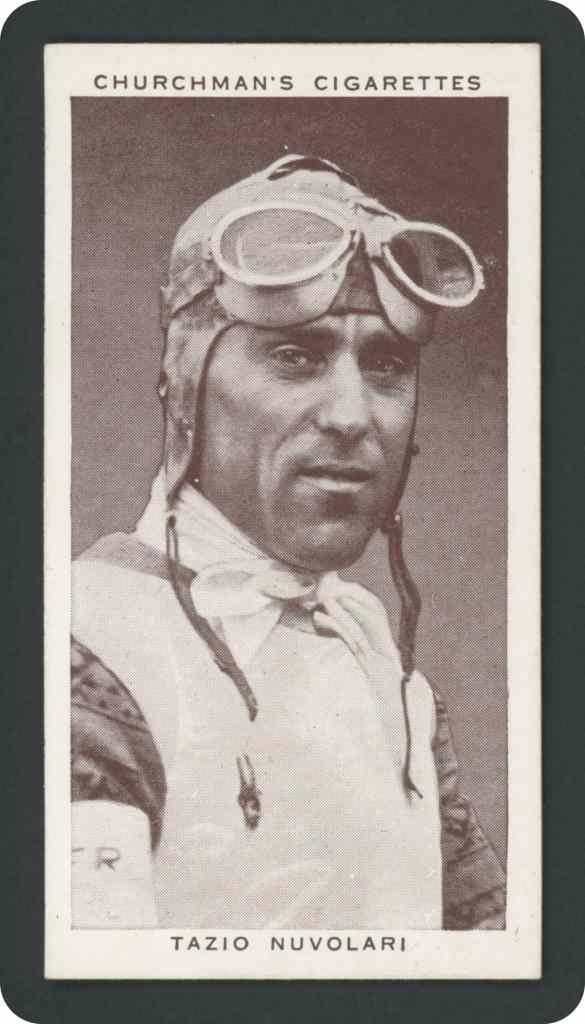
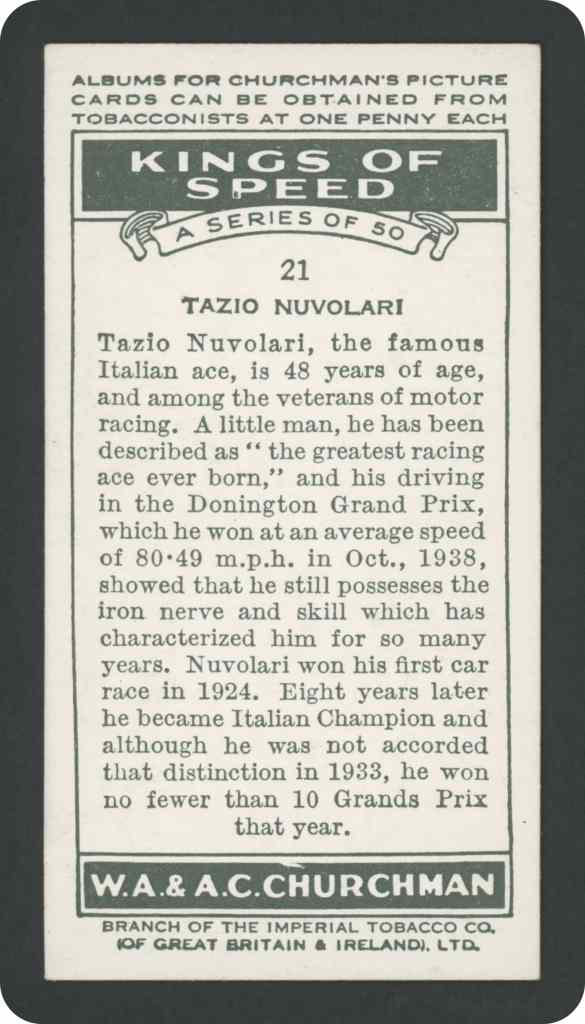
Tazio Nuvolari
Tazio Nuvolari, the famous Italian ace, is 48 years of age, and among the veterans of motor racing. A little man, he has been described as ” the greatest racing ace ever born,” and his driving in the Donington Grand Prix, which he won at an average speed of 80•49 m.p.h. in Oct., 1938, showed that he still possesses the iron nerve and skill which has characterized him for so many years. Nuvolari won his first car race in 1924. Eight years later he became Italian Champion and although he was not accorded that distinction in 1933, he won no fewer than 10 Grands Prix that year.
No Variations
No Error Cards Reported
22
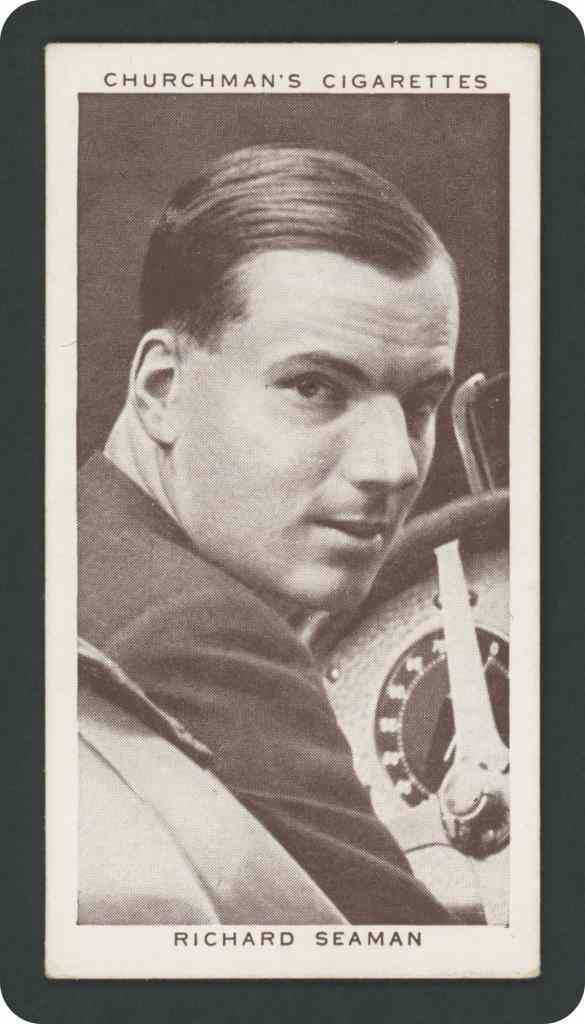
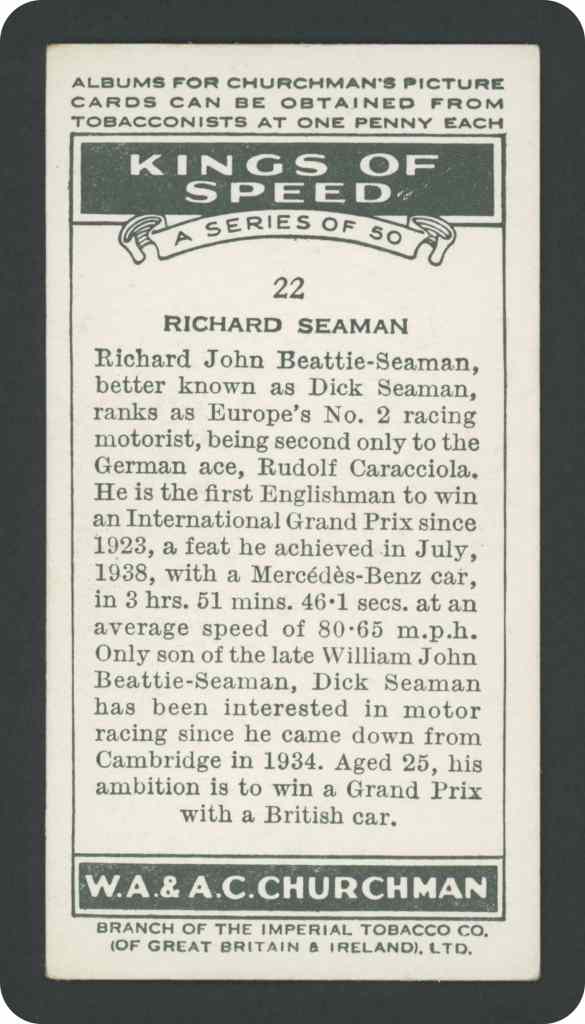
Richard Seaman
Richard John Beattie-Seaman, better known as Dick Seaman, ranks as Europe’s No. 2 racing motorist, being second only to the German ace, Rudolf Caracciola. He is the first Englishman to win an International Grand Prix since 1923, a feat he achieved in July, 1938, with a Mercédès-Benz car, in 3 hrs. 51 mins. 46•1 secs. at an average speed of 80•65 m.ph. Only son of the late William John Beattie-Seaman, Dick Seaman has been interested in motor racing since he came down from Cambridge in 1934. Aged 25, his ambition is to win a Grand Prix with a British car.
No Variations
No Error Cards Reported
23
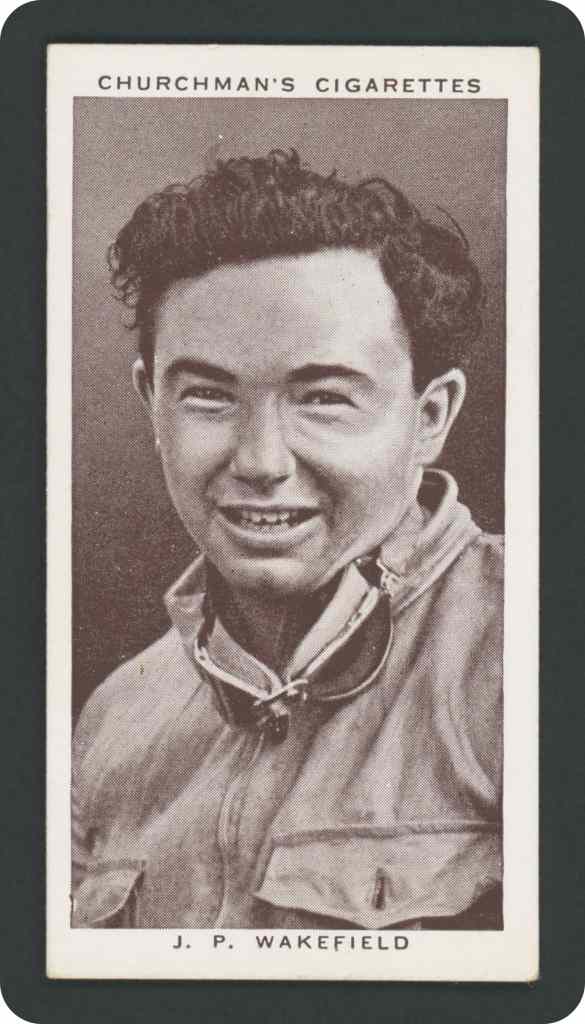
J. P. Wakefield
John Peter Wakefield won the J.C.C. 200-mile Race at Brook-lands at an average speed of 70-97 m.p.h., Aug., 1938, after an exciting duel with ” B. Bira” (Prince Birabongse of Siam). He is a wealthy young aeronautical student and races for ” the fun of the thing.” In 1937 he took part in the J.C.C. International Trophy Race the first “massed rolling start” race ever organized in this country and claimed to be “the toughest event ever staged at Brooklands.” He fought out the finish with two other amateur drivers-Raymond Mays, the woollen broker, and Billy Cotton, the dance band leader- securing second place to Mays with a speed of 80•32 m.p.h.
No Variations
No Error Cards Reported
24
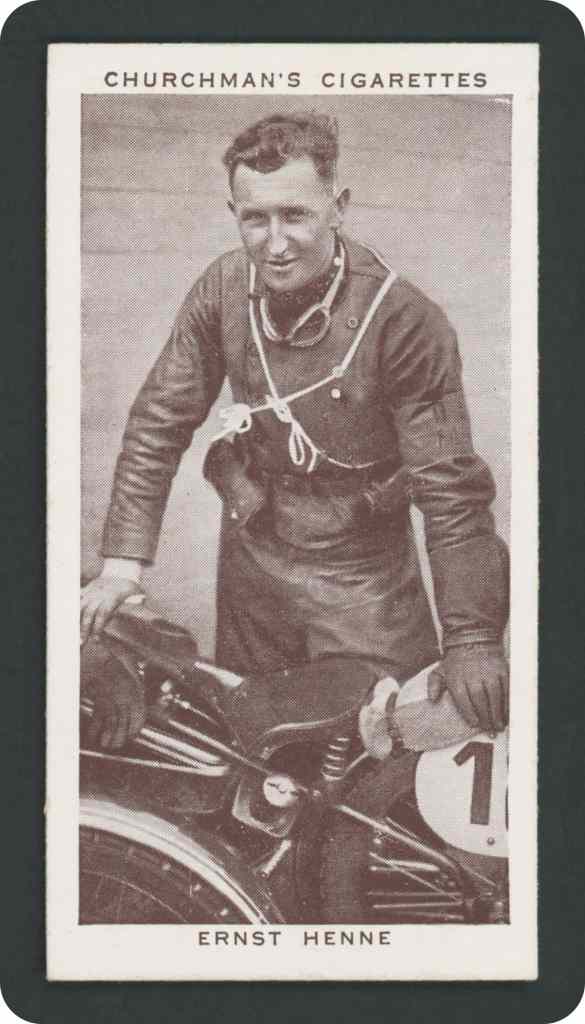
Ernst Henne
Ernst Henne, the 33-year-old Bavarian, is known as “the fastest man on two wheels.” Riding a 494 c.c. B.M.W, he established a world speed record for motor cycles with 173•674 m.p.h. on the Frankfurt-Darmstadt Autobahn, Nov., 1937. The record-breaking machine was encased in a streamlined shell and the rider adopted a semi-kneeling attitude with his body resting upon a specially-cushioned fuel tank. Henne has been riding in motor cycle races for eighteen years and won his first event ten years ago. He is a qualified engineer, but prefers riding to mechanics.
No Variations
No Error Cards Reported
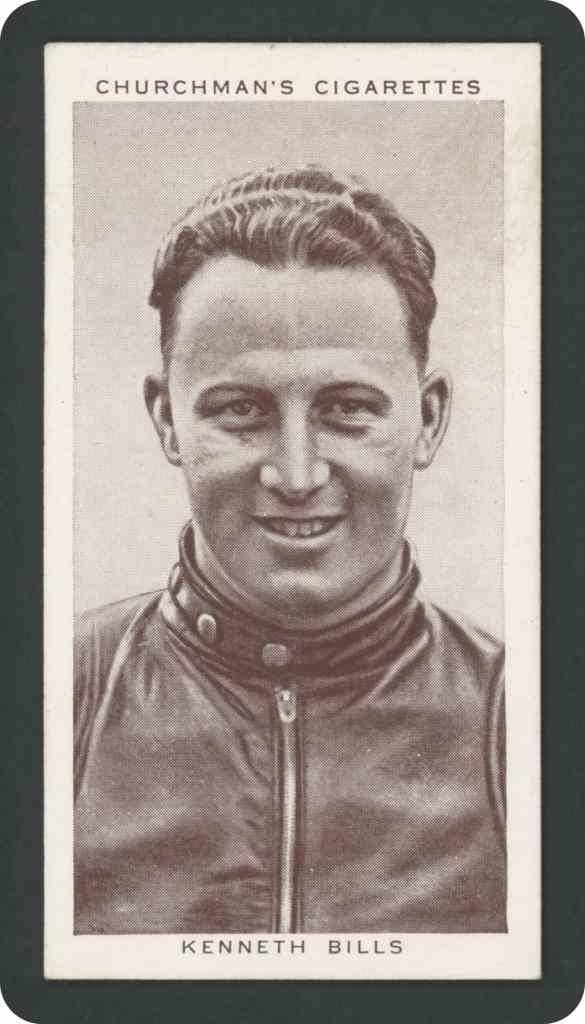
25
Kenneth Bills
Kenneth Bills is an optician by profession and lives at Gilling-ham, Kent. 26 years of age, he is of stalwart build for motor cycling, turning the scale at 14 stone. In Sept., 1938, he scored an exciting double at the Manx Grand Prix meeting. On the 13th he won the Junior event, riding a Norton, and two days later, again on a Norton, he took the Senior race from J. Lockett of Esher, with little more than 60 secs. to spare, although his average speed of 84•81 m.ph. broke all records for the course. He is the third man in the last three vears to achieve the double.
No Variations
No Error Cards Reported
26
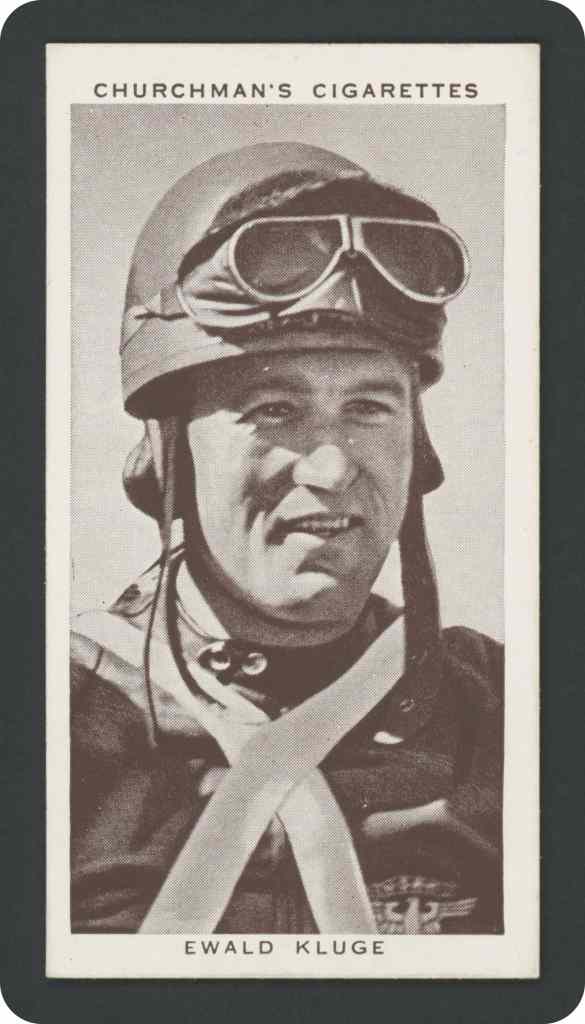
Ewald Kluge
Ewald Kluge is the 29-year-old German lightweight motor cycle champion. Riding a 248 c.c. D.K.W., he won the Lightweight Tourist Trophy Race at Douglas (1.0.M.) in June, 1938, with an average speed for the full course of 78•48 m.p.h. (which was faster than any previous lap record) and a lap record of 80•35 m.p.h. His time forthe race was 3 hrs. 21 mins. 56 secs., and he led from start to finish. Kluge also won the Euro-pean, French, Belgian and Swiss Grands Prix in 1938, as well as the Dutch T.T. (all 250 c.c. class).
No Variations
No Error Cards Reported
27
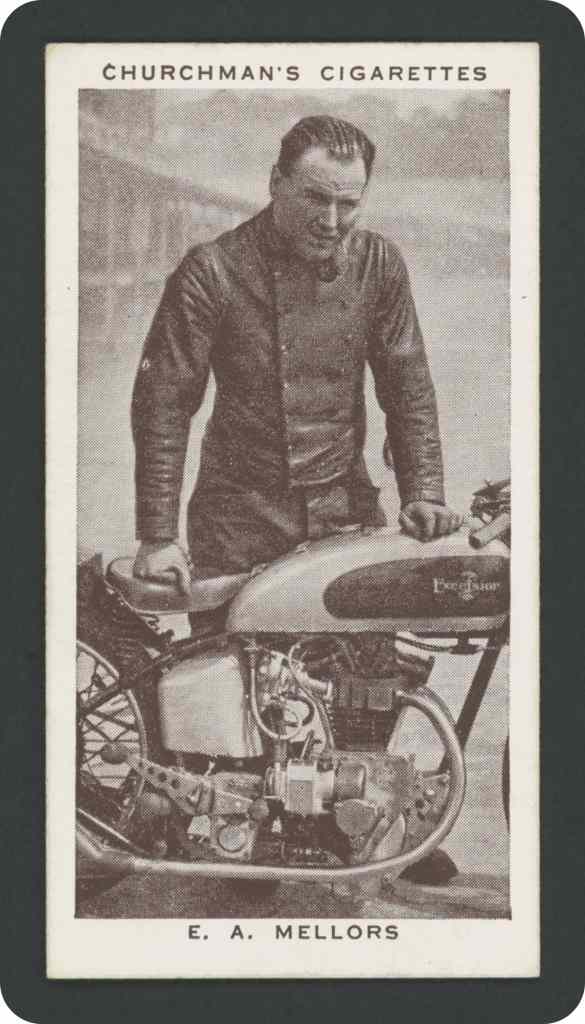
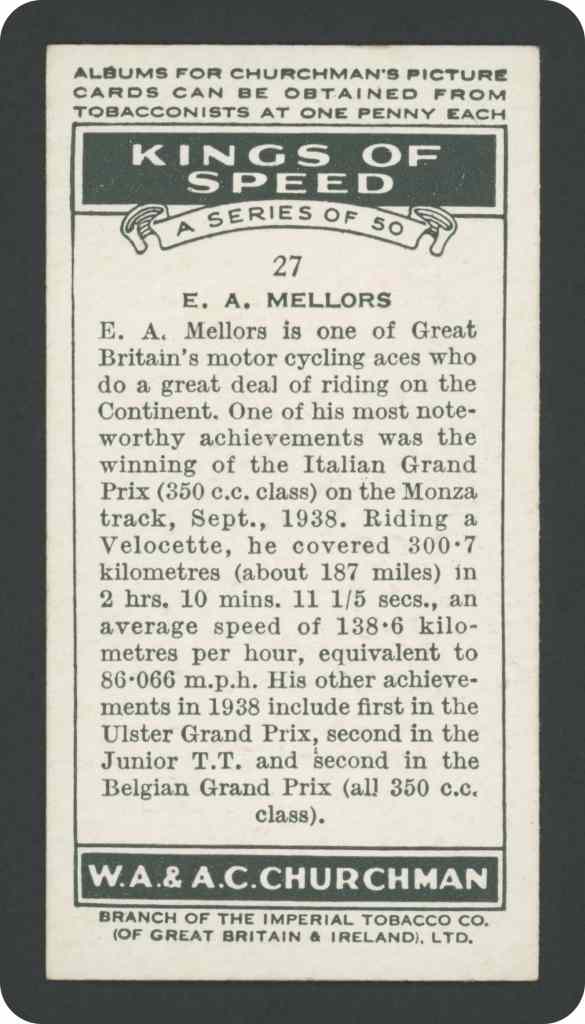
E. A. Mellors
E. A. Mellors is one of Great Britain’s motor cycling aces who do a great deal of riding on the Continent. One of his most noteworthy achievements was the winning of the Italian Grand Prix (350 c.c. class) on the Monza track, Sept., 1938. Riding a Velocette, he covered 300•7 kilometres (about 187 miles) in 2 hrs. 10 mins. 11 1/5 secs., an average speed of 138•6 kilo-metres per hour, equivalent to 86•066 m.p.h. His other achievements in 1938 include first in the Ulster Grand Prix, second in the Junior T.T. and second in the Belgian Grand Prix (all 350 c.c. class).
No Variations
No Error Cards Reported
28
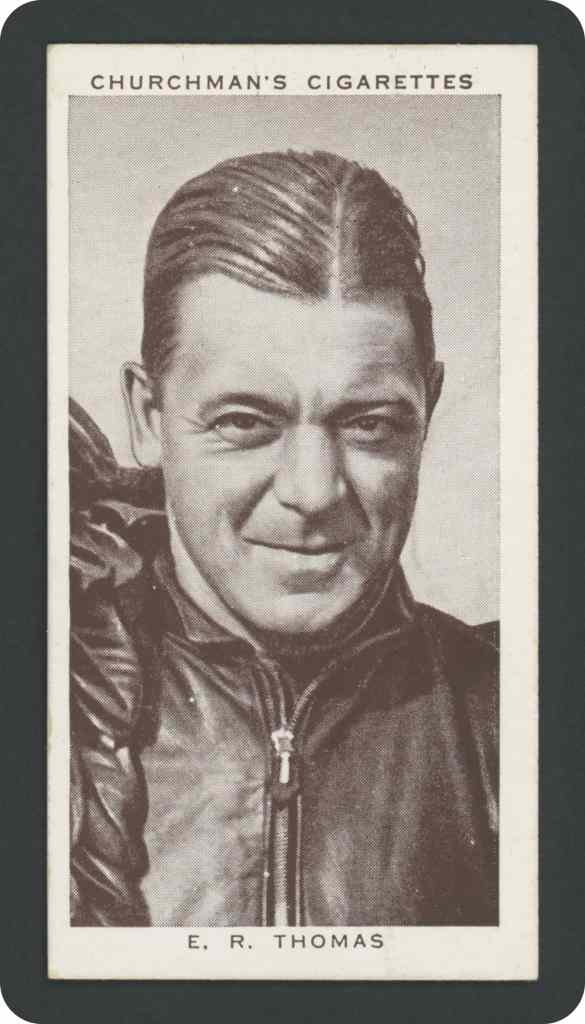
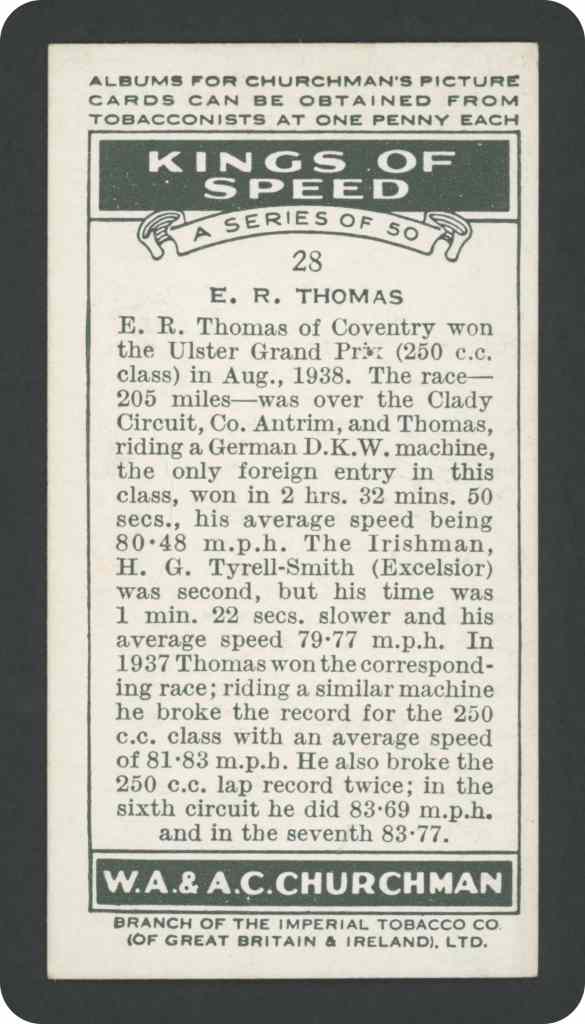
E. R. Thomas
B. R. Thomas of Coventry won the Ulster Grand Prix (250 c.c. class) in Aug., 1938. The race, 205 miles- -was over the Clady Circuit, Co. Antrim, and Thomas, riding a German D.K.W. machine, the only foreign entry in this class, won in 2 hrs. 32 mins. 50 secs., his average speed being 80•48 m.p.h. The Irishman, H. G. Tyrell-Smith (Excelsior) was second, but his time was 1 min. 22 secs. slower and his average speed 79•77 m.p.h. In 1937 Thomas won the corresponding race; riding a similar machine he broke the record for the 250 c.c. class with an average speed of 81°83 m.p.b. He also broke the 250 c.c. lap record twice; in the sixth circuit he did 83•69 m.p.h. and in the seventh 83:77.
No Variations
No Error Cards Reported
29
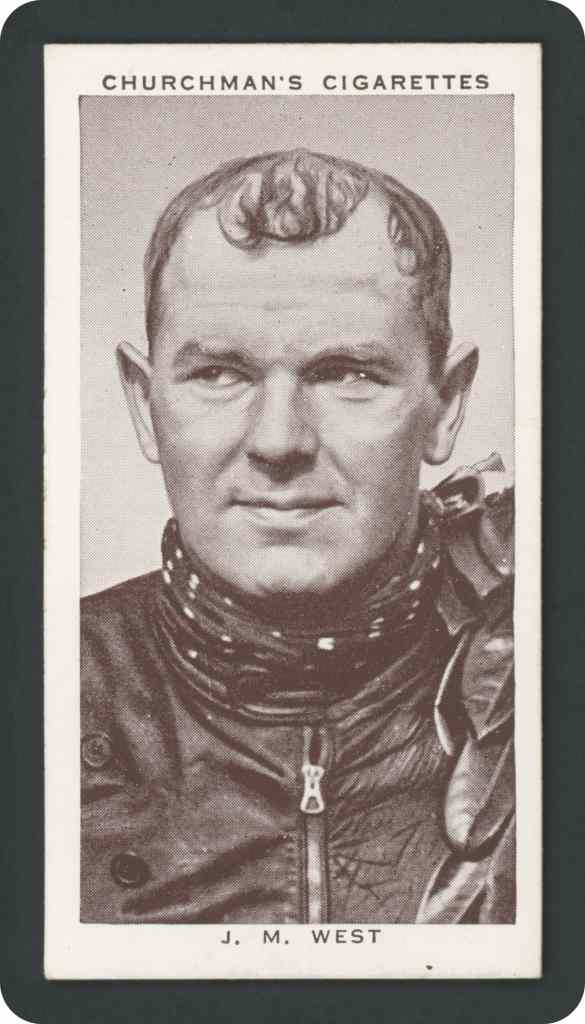
J. M. West
J. M. West has the distinction of having won a motor cycle road race at a greater speed than anvone else in the world. Riding a German B.M.W. in the Ulster Grand Prix meeting, Aug., 1938, he won the event with a speed of 93-98 m.p.h., the fastest average speed ever recorded in a motor cycle road race. This beat the previous record of 92•27 m.p.h. with which the Dutch Tourist Trophy was won by Karl Gall in 1937. West was first in the Ulster Grand Prix, 1937, and third in the Belgian Grand Frix, 1938.
No Variations
No Error Cards Reported
30
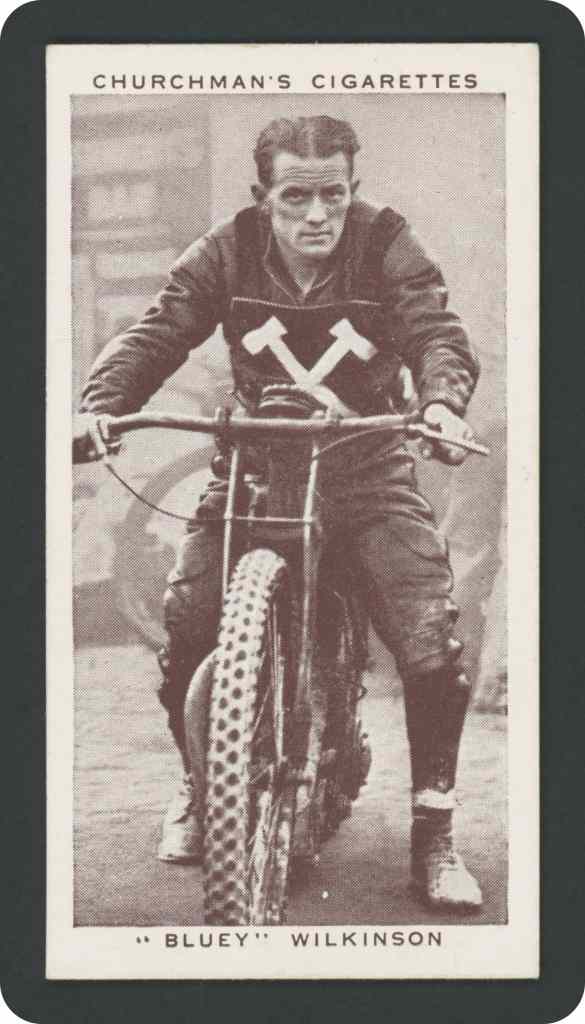
“Bluey” Wilkinson
Arthur Wilkinson, better known as “Bluey’ (this being the Australian word for red hair), established himself as World Speedway Champion at Wembley in Sept., 1938. He rode in the final with his shoulder in plaster as the result of a spill a few days before. An Australian, “Bluey” was born on Aug. 27th, 1911, and came to this country in 1927. He is the star of the West Ham team and has the electrifying knack of winning races in the last lap when they seem well lost. He started life as a newsboy and is now a £100-a-week Speedway Champion.
No Variations
No Error Cards Reported
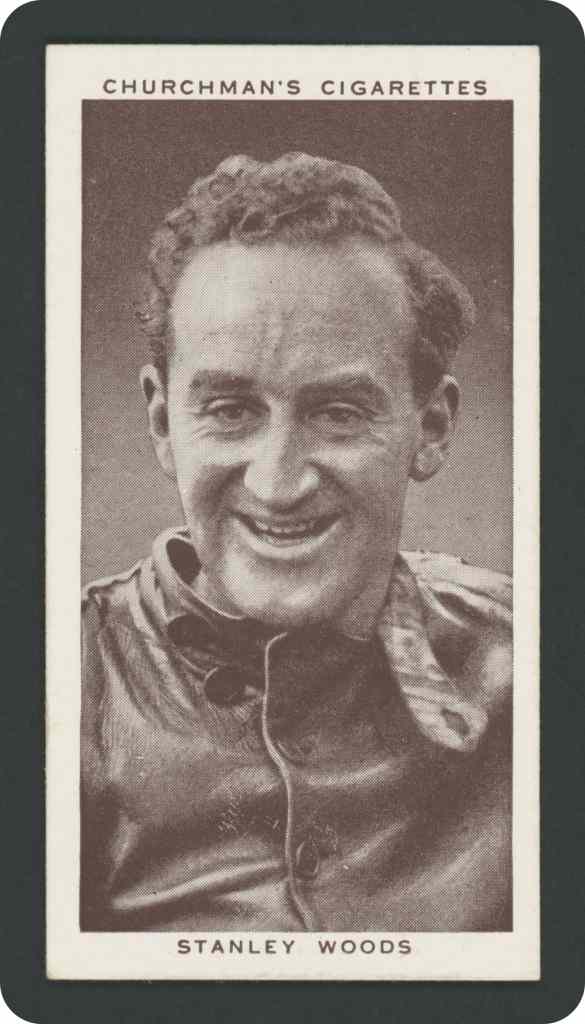
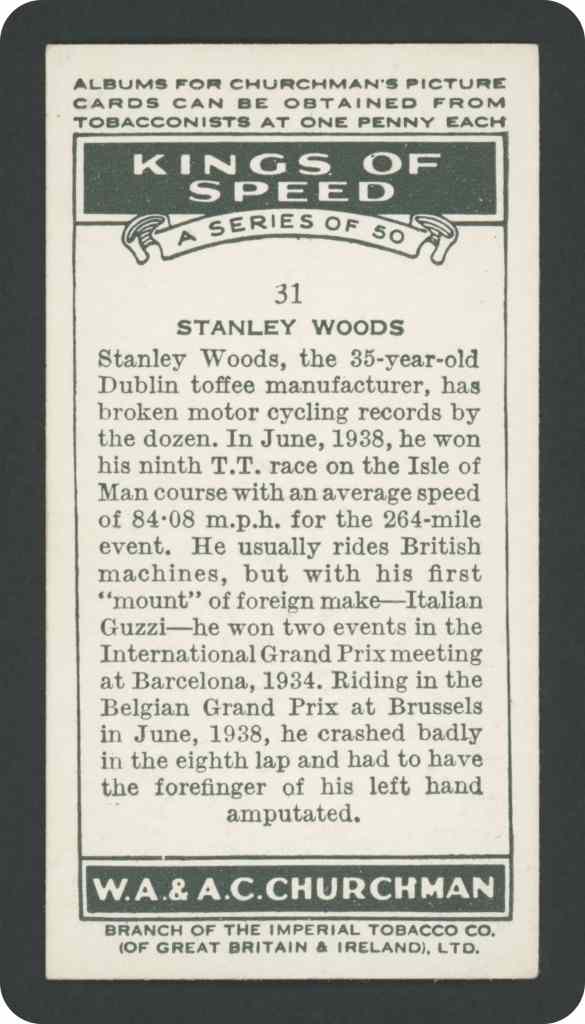
31
Stanley Woods
Stanley Woods, the 35-year-old Dublin toffee manufacturer, has broken motor cycling records by the dozen. In June, 1938, he won his ninth T.T. race on the Isle of Man course with an average speed of 84:08 m.p.h. for the 264-mile event. He usually rides British machines, but with his first “mount” of foreign make Italian Guzzi he won two events in the International Grand Prix meeting at Barcelona, 1934. Riding in the Belgian Grand Prix at Brussels in June, 1938, he crashed badly in the eighth lap and had to have the forefinger of his left hand amputated.
No Variations
No Error Cards Reported
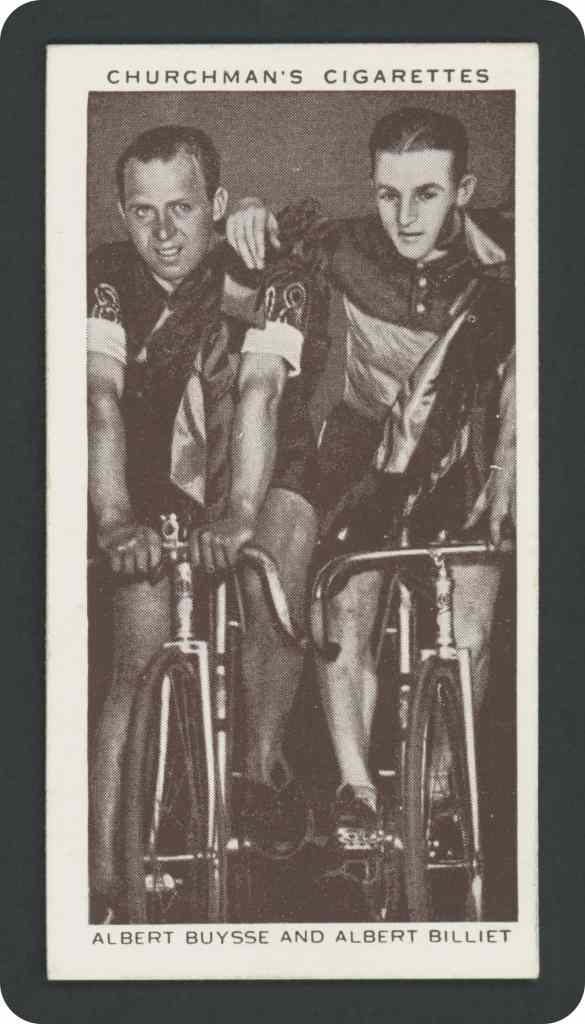
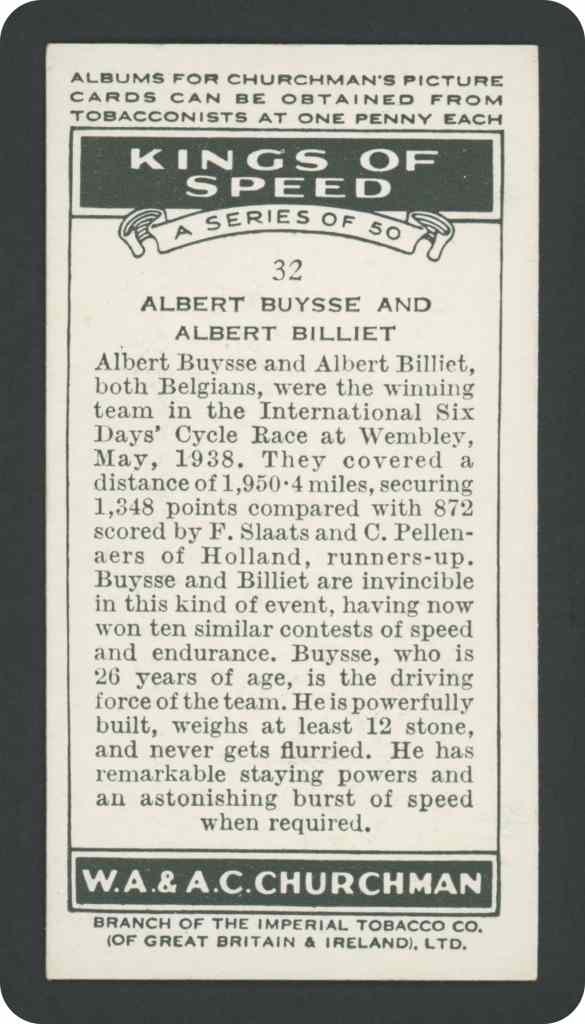
32
Albert Buysse And Albert Billiet
Albert Buysse and Albert Billiet, both Belgians, were the winning team in the International Six Davs’ Cycle Race at Wembley, May, 1938. They covered a distance of 1,950•4 miles, securing 1,348 points compared with 872 scored by F. Slaats and C. Pellen-aers of Holland, runners-up. Buvsse and Billiet are invincible in this kind of event, having now won ten similar contests of speed and endurance. Buysse, who is 26 years of age, is the driving force of the team. He is powerfully built, weighs at least 12 stone, and never gets flurried. He has remarkable staying powers and an astonishing burst of speed when required.
No Variations
No Error Cards Reported
33
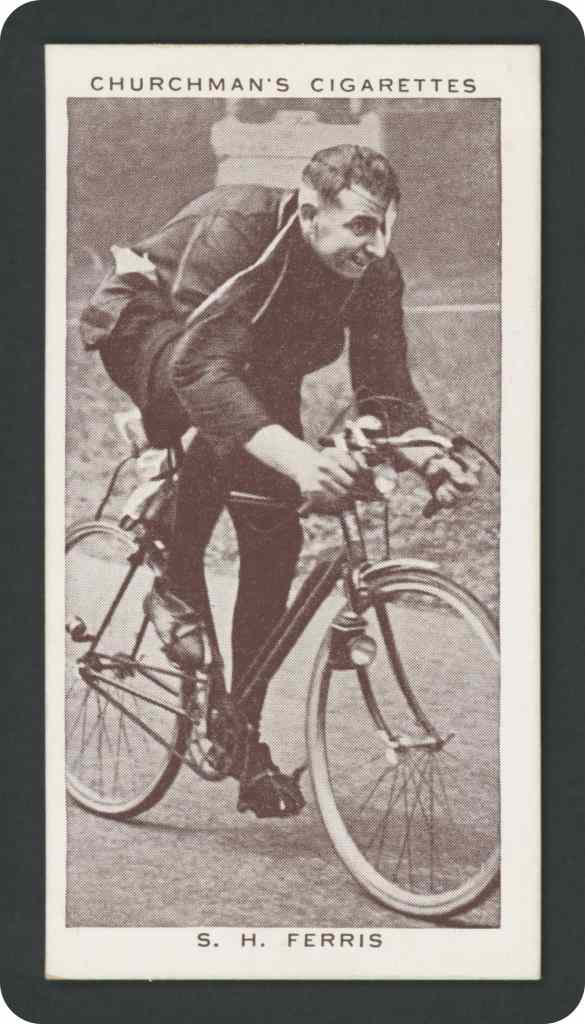
S. H. Ferris
S. HI. Ferris, the Hounslow (Middlesex) cyclist, holds the record for the Land’s End-John o’ Groat’s run. In July, 1937, he did the long journey in 2 days 6 hrs. 33 mins., breaking the existing record by 2 hrs. 28 mins. He also holds the official record for 1,000 miles, covering that distance in Great Britain in 70 hrs. 40 mins., 1937. In Oct., 1938, Ferris set up a new 24 hrs. record, covering a distance of 4614 miles from Edinburgh to the South Coast. He is 31 years of age.
No Variations
No Error Cards Reported
34
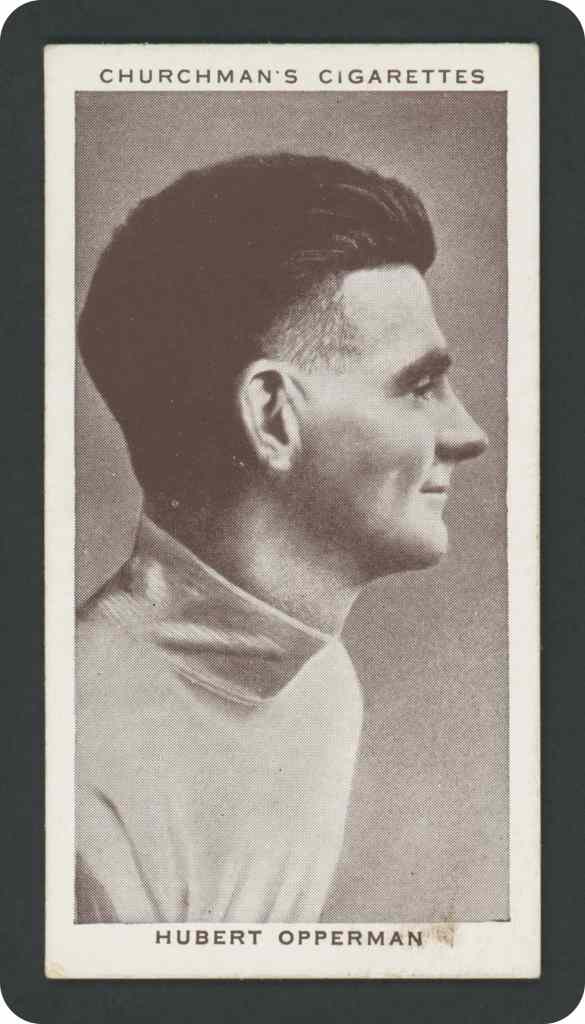
Hubert Opperman
Formerly a telegraph messenger boy, Hubert Opperman is now one of the world’s most famous racing cyclists. In Dec., 1938, he rode 1,000 miles from Adelaide to Sydney in 63 hrs. 37% mins. The official world record is held by S. H. Ferris, who covered tie same distance in Great Britain in 70 hrs. 40 mins. (1937). Other records held by Opperman include 885 miles behind pacing motor in 24 hrs.; 107} miles in 2 hrs. and 585 miles paced by tandems in 24 hrs. Opperman is 34 years of age and an Australian by birth.
No Variations
No Error Cards Reported
35
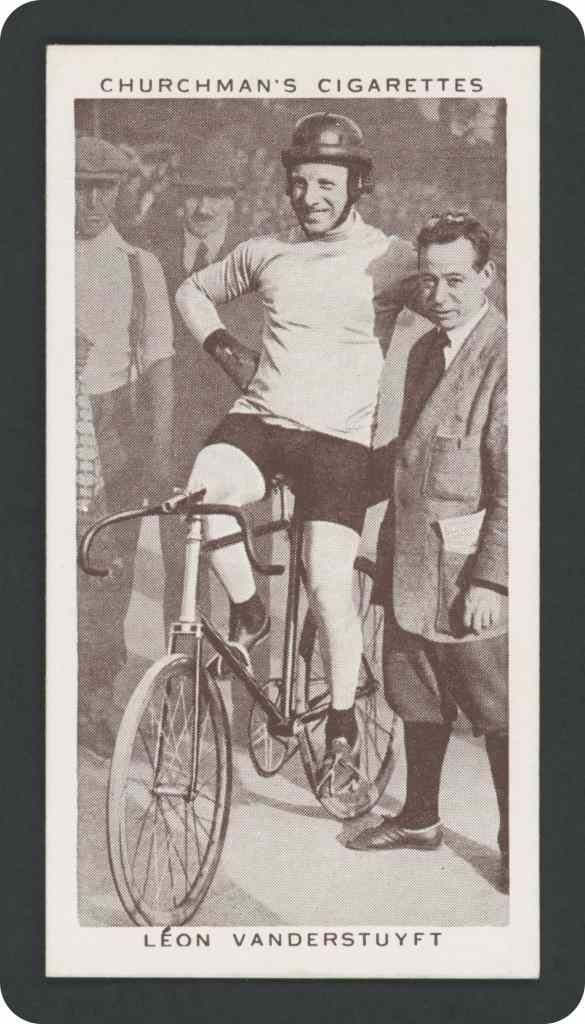
Leon Vanderstuyft
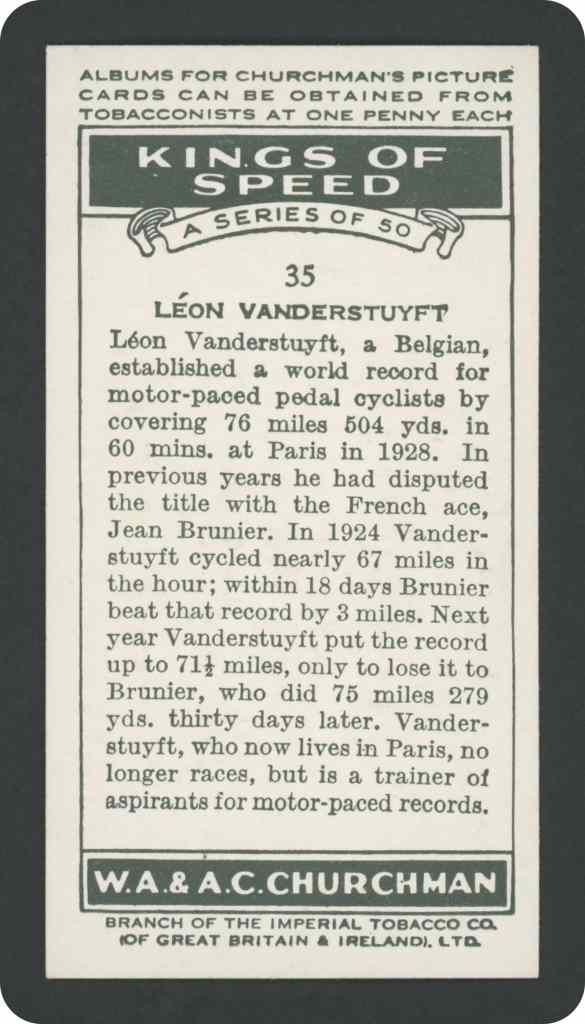
Léon Vanderstuyft, a Belgian, established a world record for motor-paced pedal cyclists by covering 76 miles 504 yds. in 60 mins. at Paris in 1928. In previous years he had disputed the title with the French ace, Jean Brunier. In 1924. Vander-stuyft cycled nearly 67 miles in the hour; within 18 days Bruner beat that record by 3 miles. Next year Vanderstuyft put the record up to 71½ miles, only to lose it to Brunier, who did 75 miles 279 yds. thirty days later. Vander-stuyft, who now lives in Paris, no longer races, but is a trainer of aspirants or motor-paced records.
No Variations
No Error Cards Reported
36
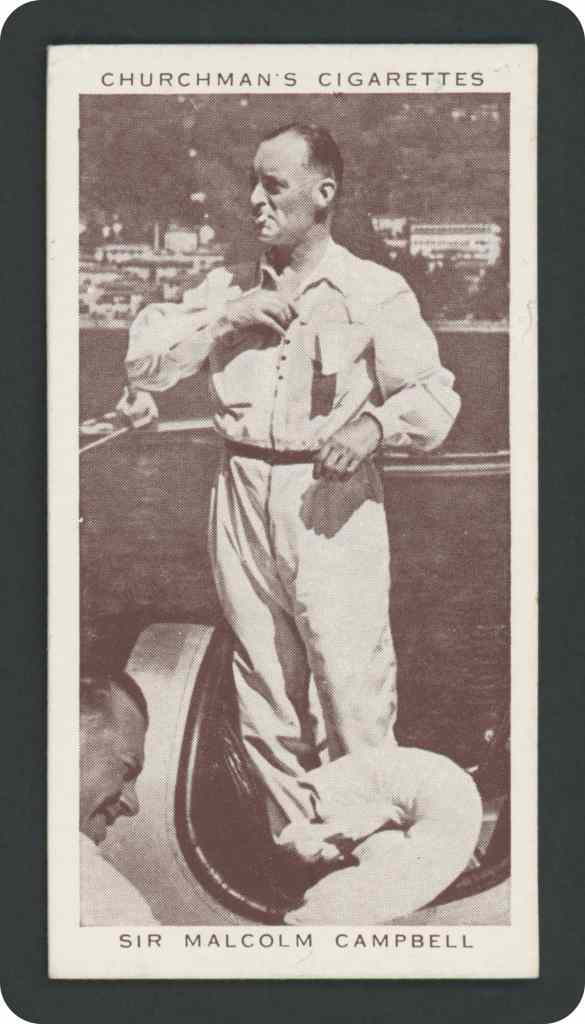
Sir Malcom Campbell
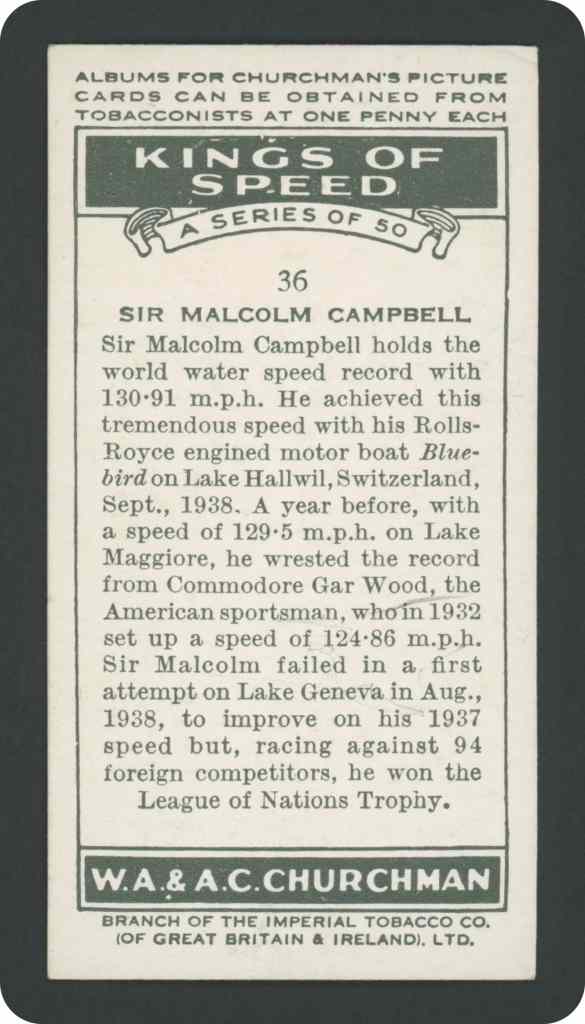
Sir Malcolm Campbell holds the world water speed record with 130-91 m.p.h. He achieved this tremendous speed with his Rolls-Royce engined motor boat Bluebird on Lake Hallwil, Switzerland, Sept., 1938. A year before, with a speed of 129•5 m.p.h. on Lake Maggiore, he wrested the record from Commodore Gar Wood, the American sportsman, who in 1932 set up a speed of 124•86 m.p.h. Sir Malcolm failed in a first attempt on Lake Geneva in Aug., 1938, to improve on his 1937 speed but, racing against 94 foreign competitors, he won the League of Nations Trophy.
No Variations
No Error Cards Reported
37
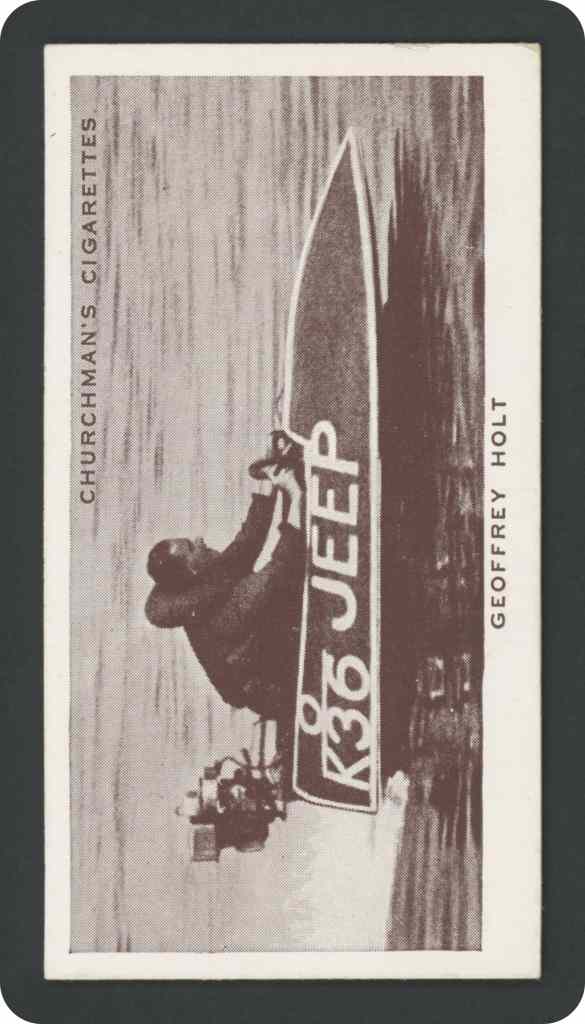
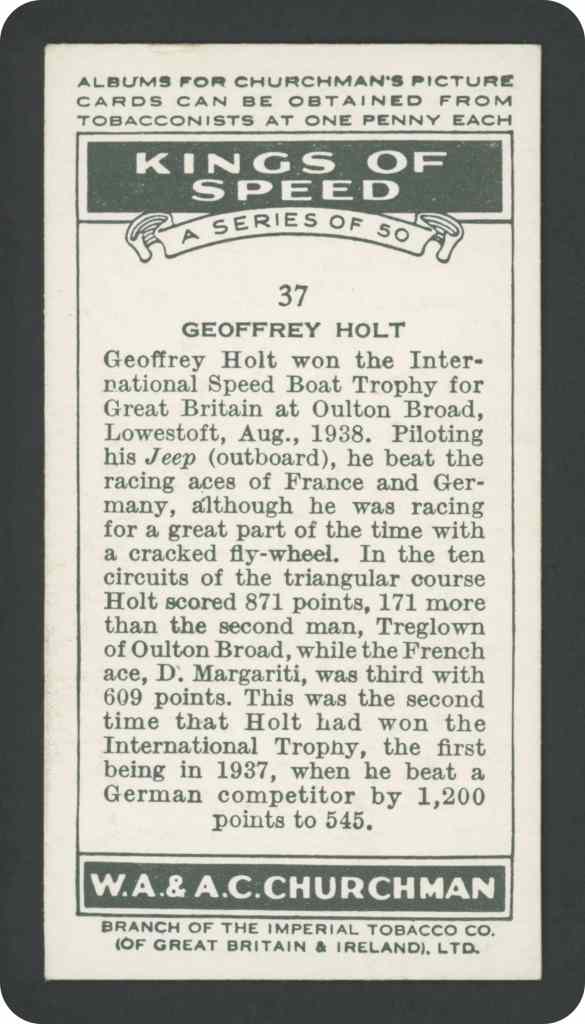
Geoffrey Holt
Geoffrey Holt won the International Speed Boat Trophy for Great Britain at Oulton Broad, Lowestoft, Aug., 1938. Piloting his Jeep (outboard), he beat the racing aces of France and Ger-many, although he was racing for a great part of the time with a cracked fly-wheel. In the ten circuits of the triangular course Holt scored 871 points, 171 more than the second man,
Treglown of Oulton Broad, while the French ace, D. Margariti, was third with 609 points. This was the second time that Holt had won the International Trophy, the first being in 1937, when he beat a German competitor by 1,200 points to 545.
No Variations
No Error Cards Reported
38
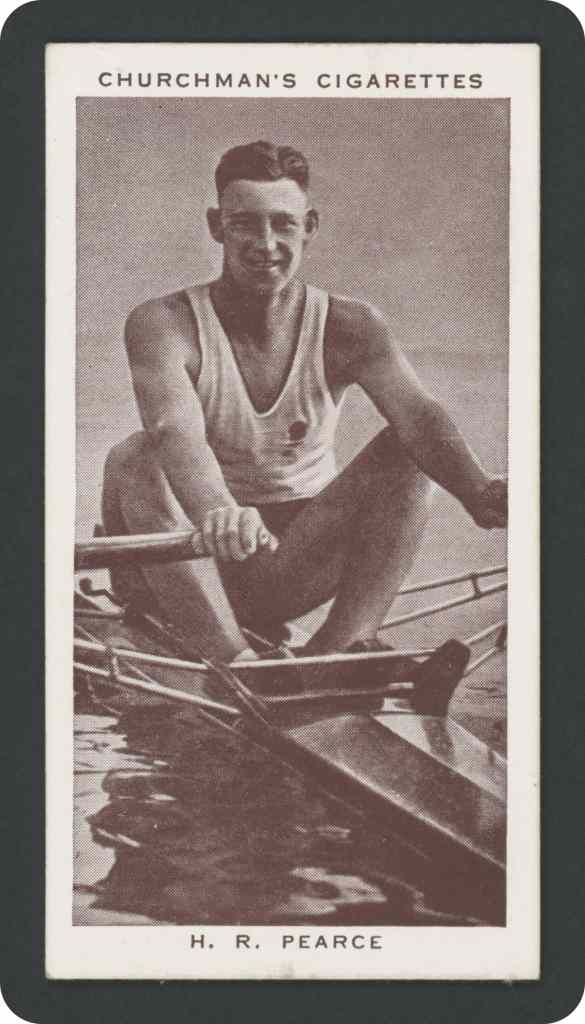
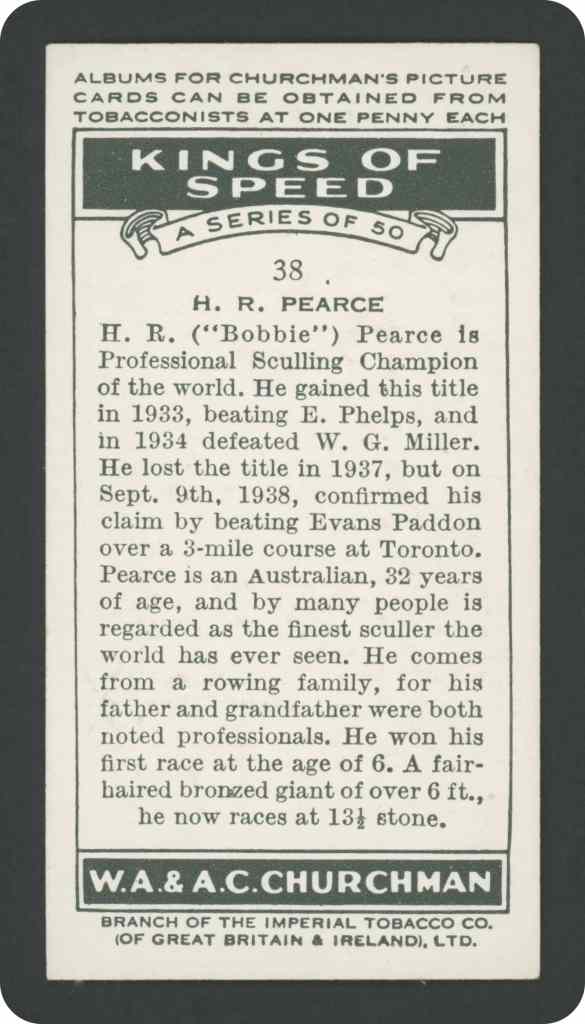
H. R. Pearcs
H. R. (“‘Bobbie”) Pearce is Professional Sculling Champion of the world. He gained this title in 1933, beating E. Phelps, and in 1934 defeated W. G. Miller. He lost the title in 1937, but on Sept. 9th, 1938, confirmed his claim by beating Evans Paddon over a 3-mile course at Toronto. Pearce is an Australian, 32 years of age, and by many people is regarded as the finest sculler the world has ever seen. He comes from a rowing family, for his father and grandfather were both noted professionals. He won his first race at the age of 6. A fair-haired bronzed giant of over 6 ft., he now races at 13½ stone.
No Variations
No Error Cards Reported
39
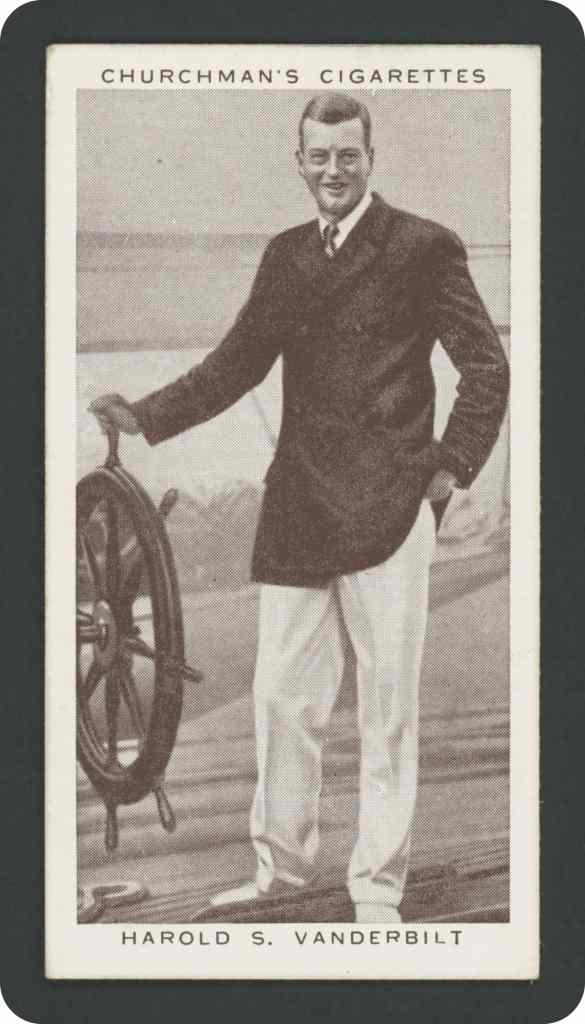
Harold S. Vandebilt
Harold S. Vanderbilt is the owner of the yacht Ranger which successfully defended the America’s Cup against the challenge of Mr. T. O. M. Sopwith’s Endeavour II in 1937. Mr. Vanderbilt, a great grandson of the fanous Commodore Vanderbilt, is 55 years of age. His love for yachting dates back to his early youth, for he had his first lesson in sailing when 7 years of age. He is a qualified pilot on sea and in the air and has owned aeroplanes for the last twenty years. In the Great War he served in U.S. Submarine Chasers. Mr. Vanderbilt is one of the finest bridge players in the world.
No Variations
No Error Cards Reported
40
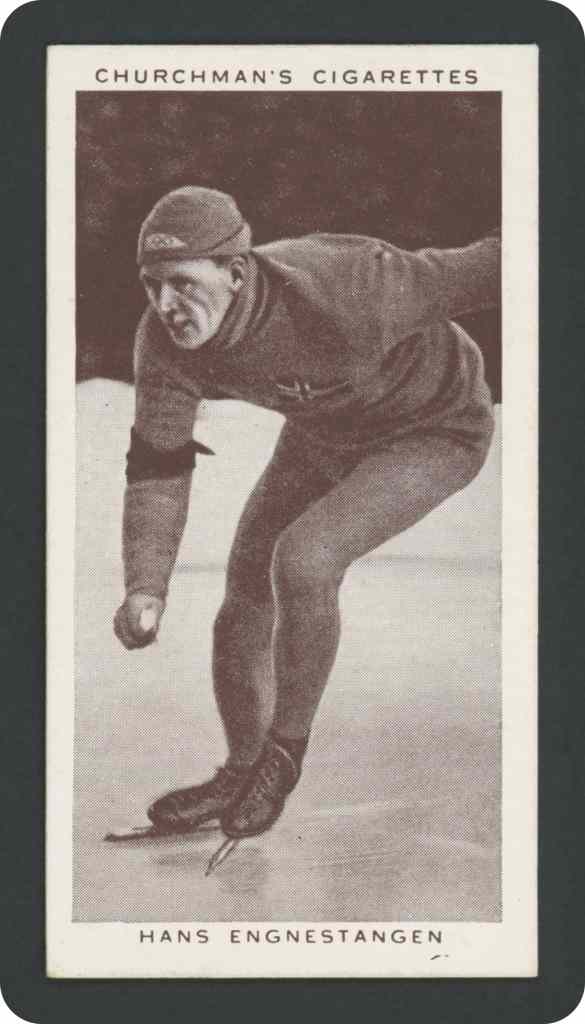
Hans Engentangen
Hans Engnestangen holds the world speed record for 500 metres on ice. He covered this distance in 41•9 secs. at Davos in 1939, breaking his own record of 42•3 secs. established the year before. That year Engnestangen also won the 1,500 metres event, his time being 2 mins. 15•9 secs. The 30-year-old son of a Norwegian farmer and one of the finest skaters in the world, he learnt to skate on Norway’s largest lake, Mösen. He was a member of the Norwegian team which went to Davos in 1933, and there he achieved fame by winning the 500 and 3,000 metres events. In the same year, at Trondhjem, he secured his first world champion-ship.
No Variations
No Error Cards Reported
41
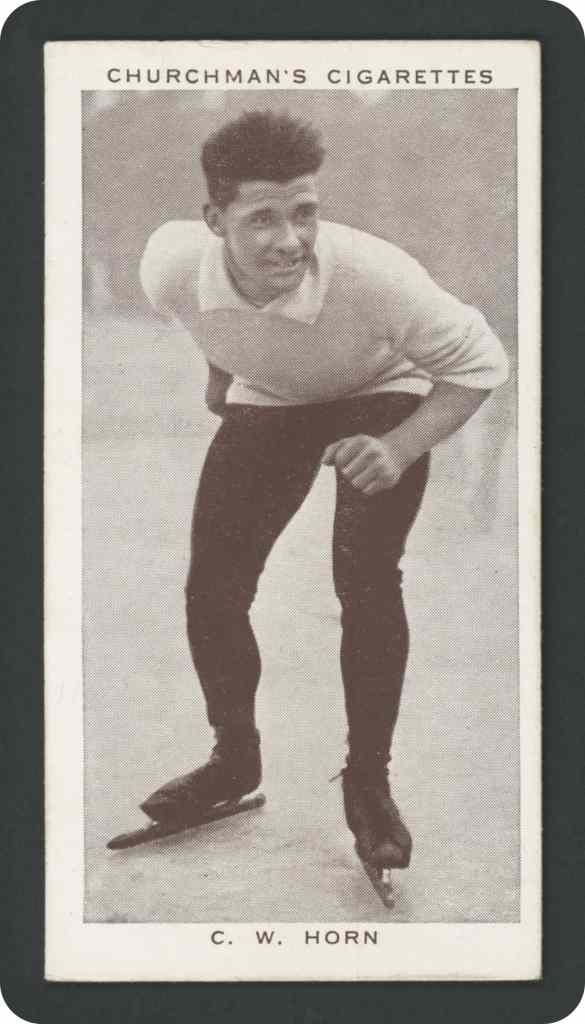
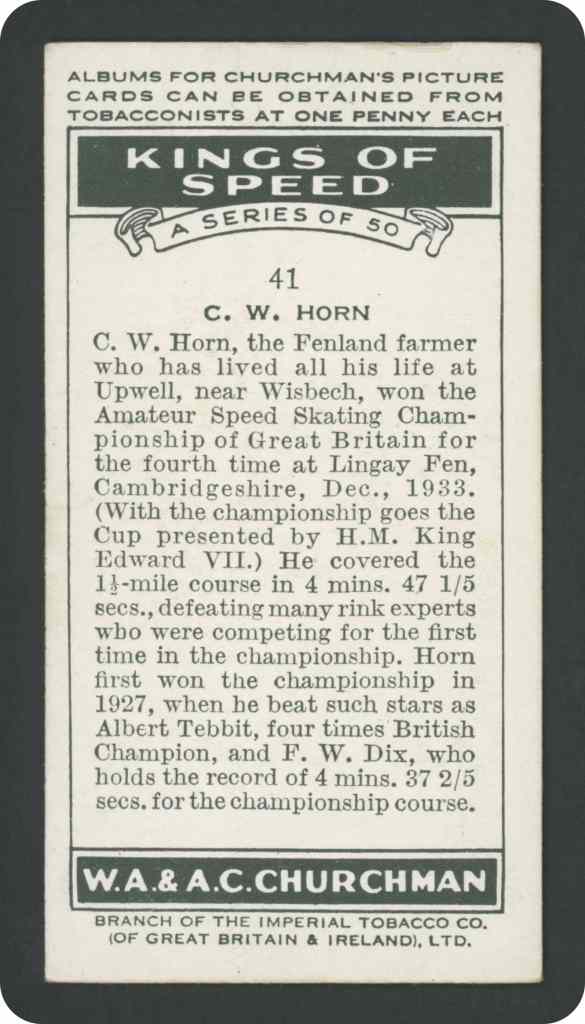
C. W. Horn
C. W. Horn, the Fenland farmer who has lived all his life at Upwell, near Wisbech, won the Amateur Speed Skating Championship of Great Britain for the fourth time at Lingay Fen, Cambridgeshire, Dec., 1933. (With the championship goes the Cup presented by H.M. King Edward VII. He covered the 11-mile course in 4 mins. 47 1/5 secs., defeating many rink experts who were competing for the first time in the championship. Horn first won the championship in 1927. when he beat such stars as Albert Tebbit, four times British Champion, and F. W. Dix, who holds the record of 4 mins. 37 2/5 secs. for the championship course.
No Variations
No Error Cards Reported
42
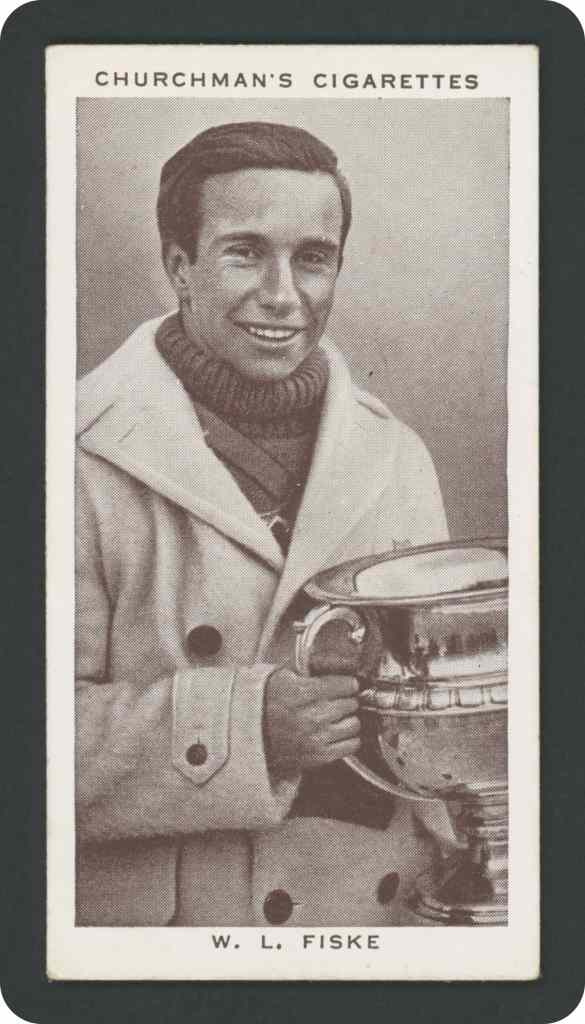
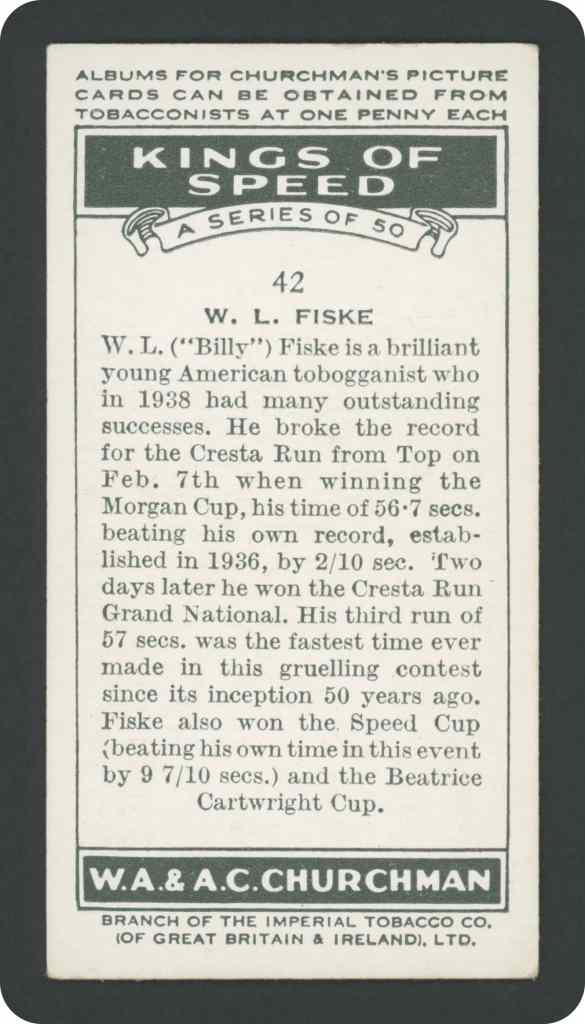
W. L. Fiske
W. L. (“Billy”) Fiske is a brilliant young American tobogganist who in 1938 had many outstanding successes. He broke the record for the Cresta Run from Top on Feb. 7th when winning the Morgan Cup, his time of 56-7 secs. beating his own record, established in 1936, by 2/10 sec. Two days later he won the Cresta Run Grand National. His third run of 57 secs. was the fastest time ever made in this gruelling contest since its inception 50 years ago. Tiske also won the Speed Cup (beating his own time in this event by 9 7/10 secs.) and the Beatrice Cartwright Cup.
No Variations
No Error Cards Reported
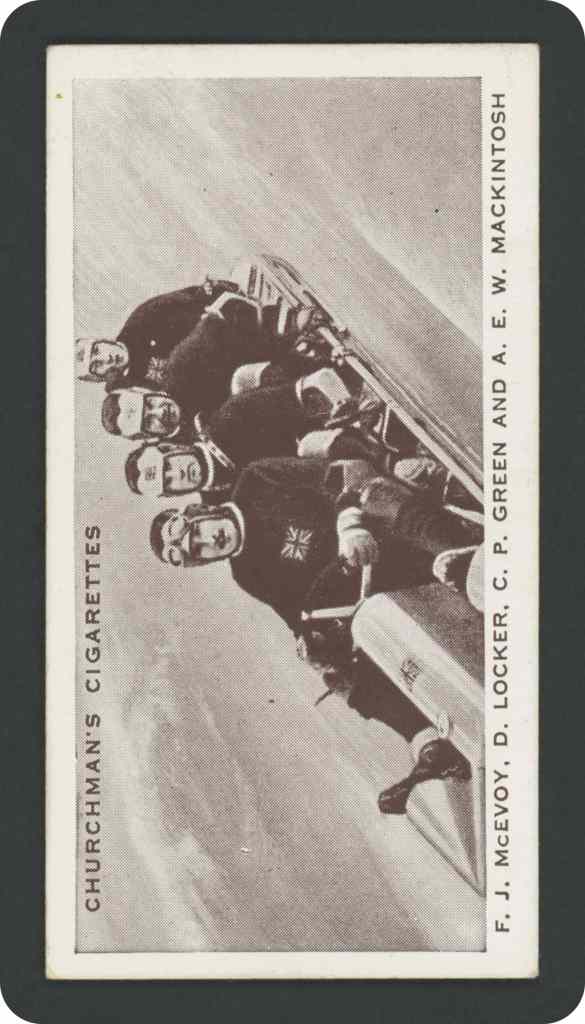
43
F. J. McEvoy, D. Locker, C. P. Green and A. E. W. Macintosh
This team won the world bobsleigh championship for Great Britain on Jan. 30th, 1938, at Garmisch Partenkirchen. Their aggregate time for the four runs was 5 mins. 4-61 secs. McEvoy, Locker and Green were in the British crew (B. H. Black being fourth man) which won the championship at St. Moritz in 1937. On Jan. 31st, 1939, at Cortina d’Ampezzo, F. J. McEvoy, P. Howard, J. Critchley and C. P. Green lost the championship to Switzerland, but made a spectacular fourth run in the final. They covered the course of 1,554 metres in the record time of 1 min. 20•75 secs.
No Variations
No Error Cards Reported
44
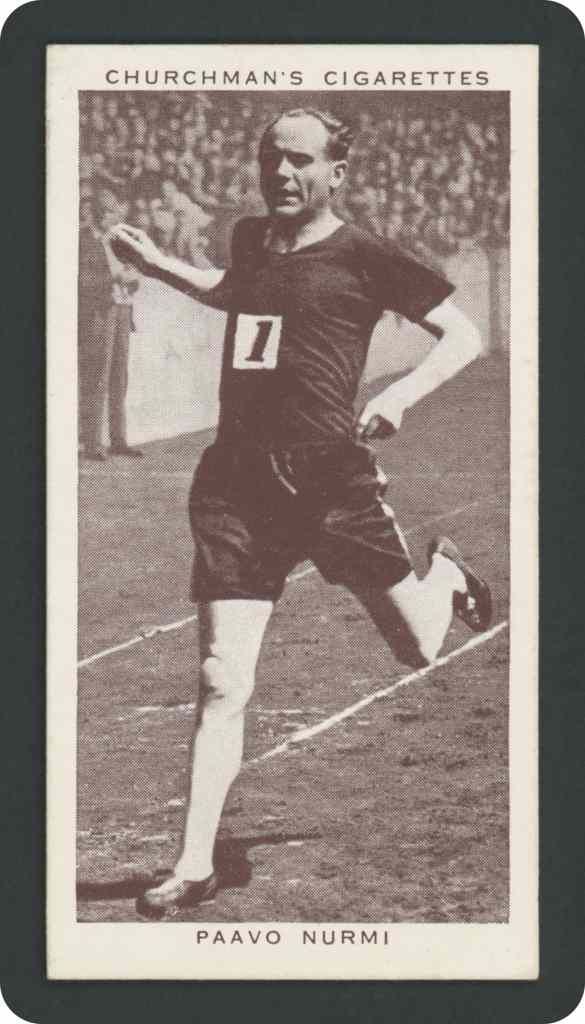
Pavvo Nurmi
Paavo Johannes Nurmi, known as “The Flying Finn,” holds the world record for 10 miles. He ran this distance in 50 mins. 15 secs. in Germany, 1928. On the same occasion he ran 11 miles 1,648 yds. in 60 mins. Nurmi commenced his racing career at the age of 15. In 1920 he made his first appearance in the International field at the Olympic Games, Antwerp; he won the 10,000 metres and a cross-country event. In 1932 he was suspended by the I.A.A.F. for alleged infringement of amateur rules, and finally retired in 1935, holding nine world titles. He is over 40 years of age.
No Variations
No Error Cards Reported
45
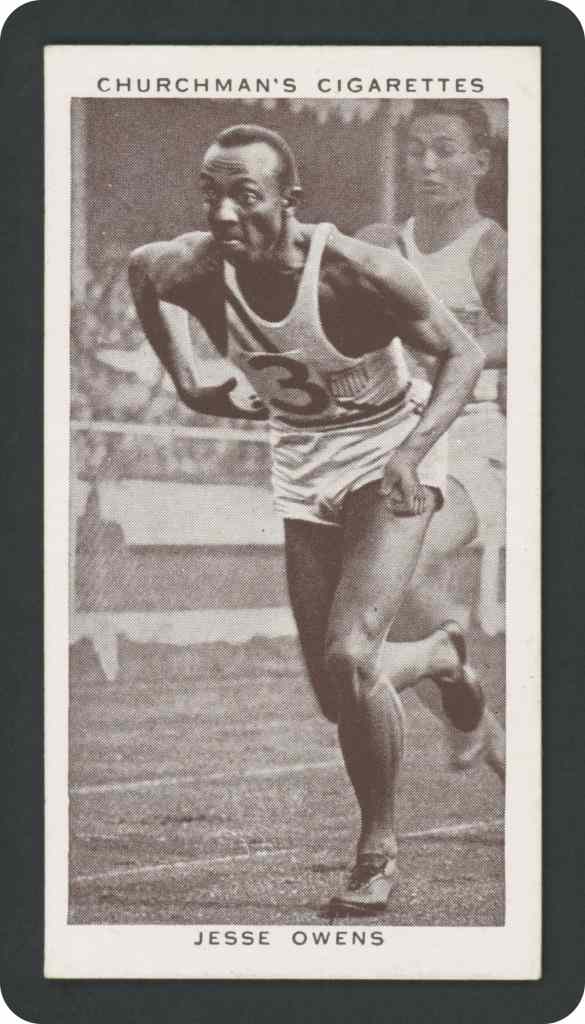
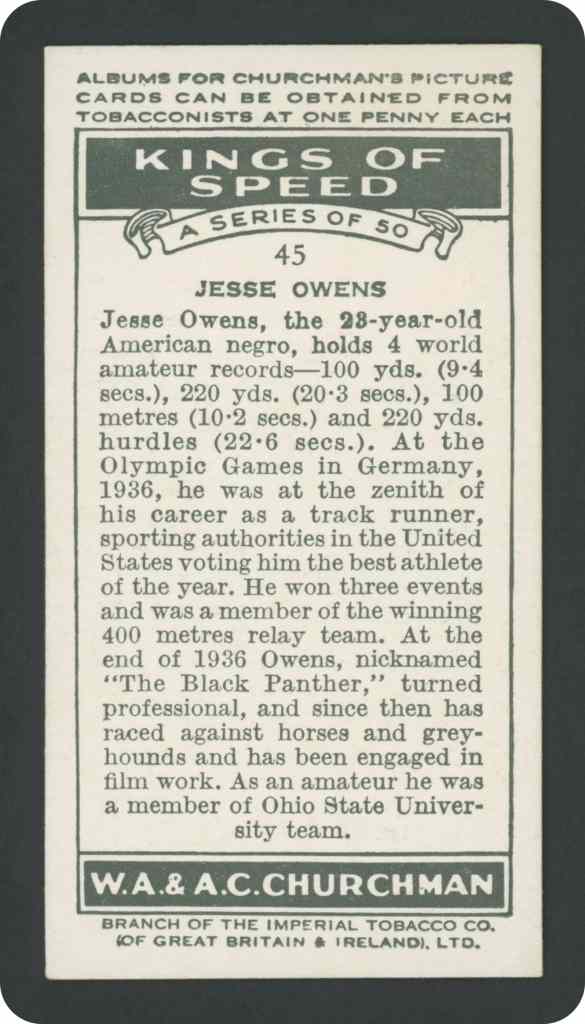
Jesse Owens
Jesse Owens, the 23-year-old American negro, holds 4 world amateur records- 100 yds. (9•4 secs.), 220 yds. (20:3 secs.), 100 metres (10-2 secs.) and 220 yds. hurdles (22•6 secs.). At the Olympic Games in Germany, 1936, he was at the zenith of his career as a track runner, sporting authorities in the United States voting him the best athlete of the year. He won three events and was a member of the winning 400 metres relay team. At the end of 1936 Owens, nicknamed “The Black Panther,” turned professional, and since then has raced against horses and greyhounds and has been engaged in film work. As an amateur he was a member of Ohio State University team.
No Variations
No Error Cards Reported
46
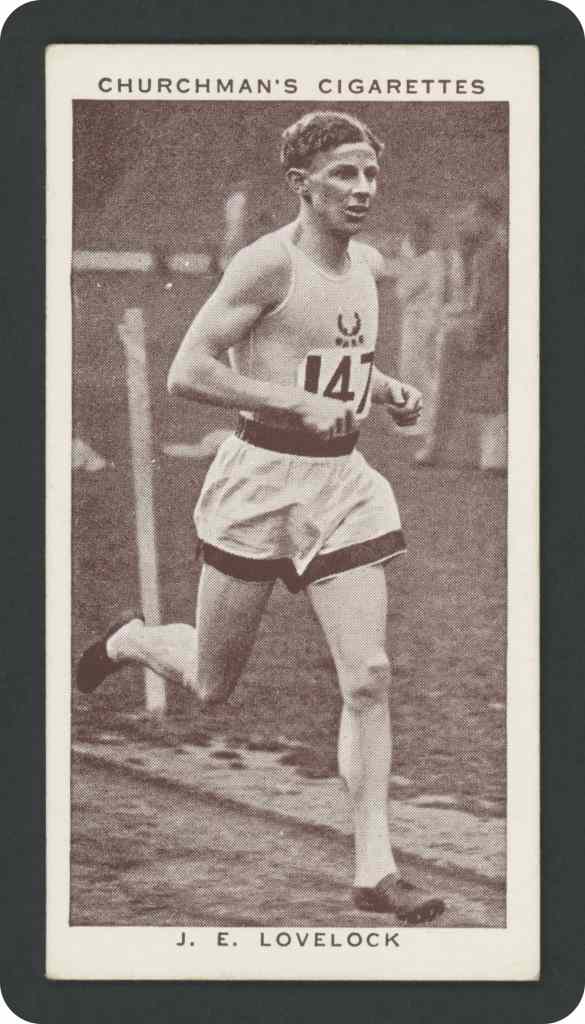
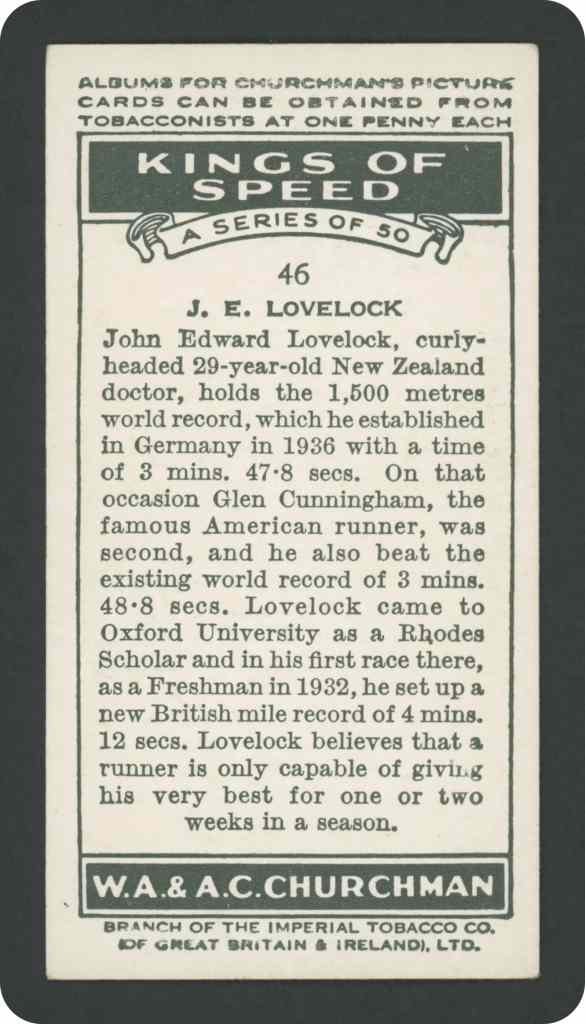
J. E. Lovelock
John Edward Lovelock, curly headed 29-year-old New Zealand doctor, holds the 1,500 metres world record, which he established in Germany in 1936 with a time of 3 mins. 47•8 secs. On that occasion Glen Cunningham, the famous American runner, was second, and he also beat the existing world record of 3 mins. 48•8 secs. Lovelock came to Oxford University as a Rhodes Scholar and in his first race there, as a Freshman in 1932, he set up a new British mile record of 4 mins. 12 secs. Lovelock believes that a runner is only capable of giving his very best for one or two weeks in a season.
No Variations
No Error Cards Reported
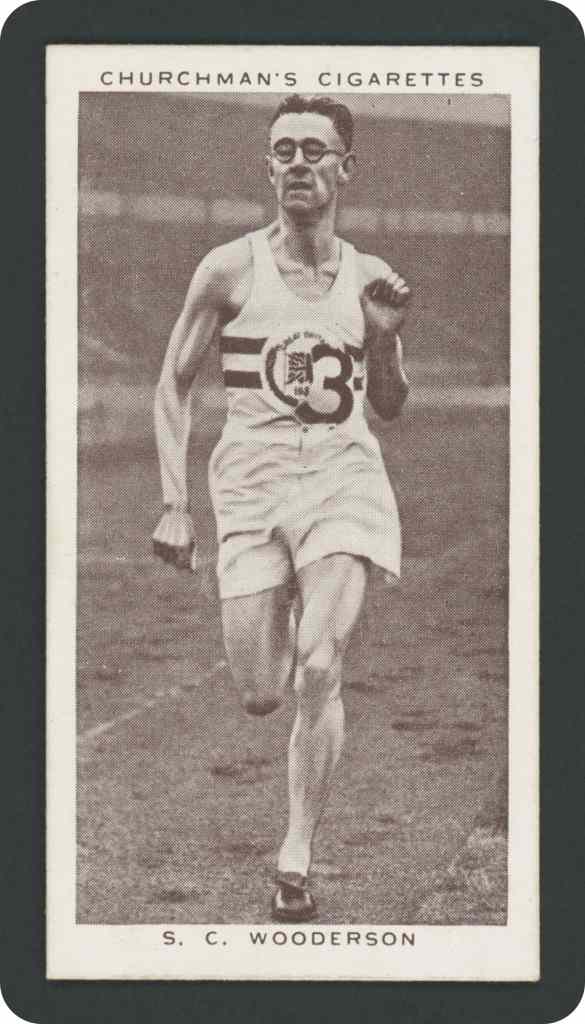
47
S. C. Wooderson
Sidney Charles Wooderson, the half- and one-mile world cham-pion, is a solicitor. Now 24 years of age, he succeeded in establishing his reputation as an athlete while qualifying to practice law, a tribute to his remarkable stamina. His world record time for the mile, which he set up in 1937, is 4 mins. 6•4 secs., and the half-mile, 1 min. 49•2 secs. (1938). Wooderson has figured in the Public Schools’ Challenge Mile four times; he won it in 1933 with a time of 4 mins. 29•8 secs. In June, 1938, he beat the British Champion, A. J. Collyer, in the Southern Championships. Wood-erson is a member of Blackheath Harriers.
No Variations
No Error Cards Reported
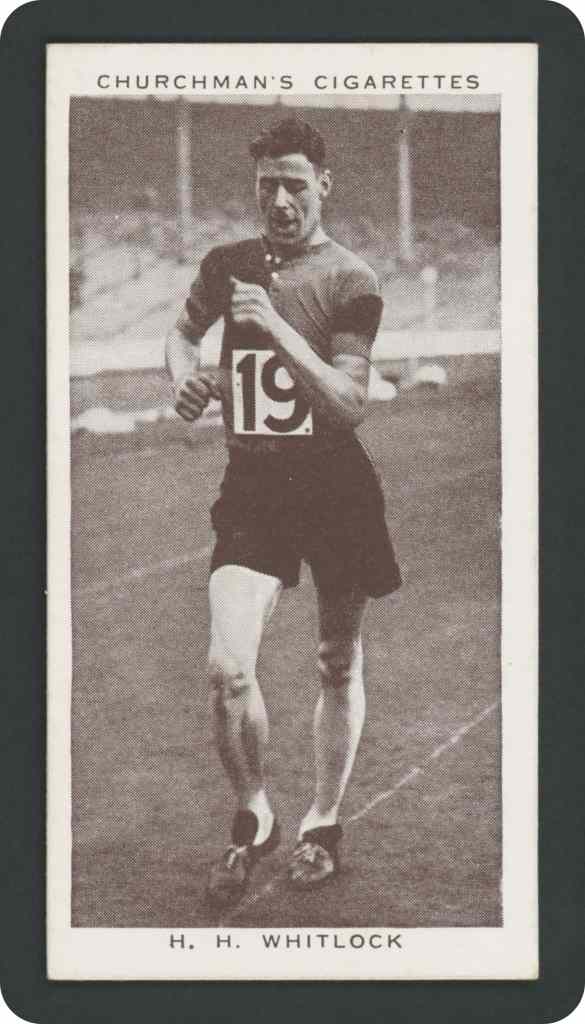
48
H. H. Whitlock
Although he is a motor engineer, walking is Harold H. Whitlock’s hobby. He is Britain’s long distance walking champion; in Sept., 1935, he covered the 52 miles from London to Brighton in the fastest time recorded-7 hrs. 53 mins. 50 secs. and was the first man to do the journey under 8 hours. He also holds the record for 50 miles, covering that distance in 7 hrs. 44 mins. 47•2 secs. at the White City in Oct., 1935, while in 1936 he captured the 50 kilometres Olympic record in 4 hrs. 30 mins. 41 secs., his average speed being nearly 7 miles an hour. Whitlock has won the London-Brighton walk four years consecutively.
No Variations
No Error Cards Reported
49
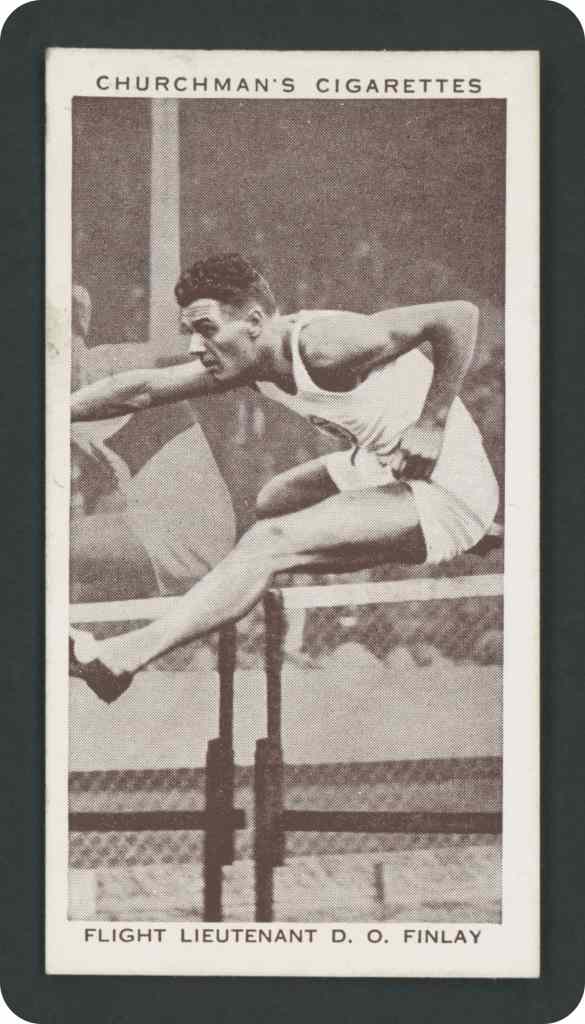
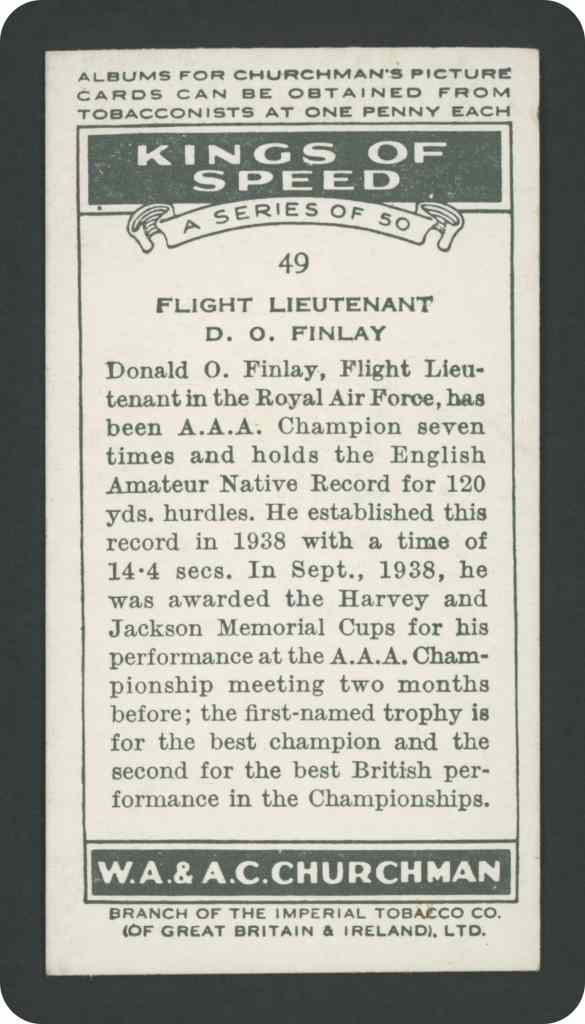
Flight Lieutenant D. O. Finlay
Donald O. Finlay, Flight Lieutenant in the Royal Air Force, has been A.A.A. Champion seven times and holds the English Amateur Native Record for 120 yds. hurdles. He established this record in 1938 with a time of 14•4 secs. In Sept., 1938, he was awarded the Harvey and Jackson Memorial Cups for his performance at the A.A.A. Championship meeting two months before; the first-named trophy is for the best champion and the second for the best British performance in the Championships.
No Variations
No Error Cards Reported
50
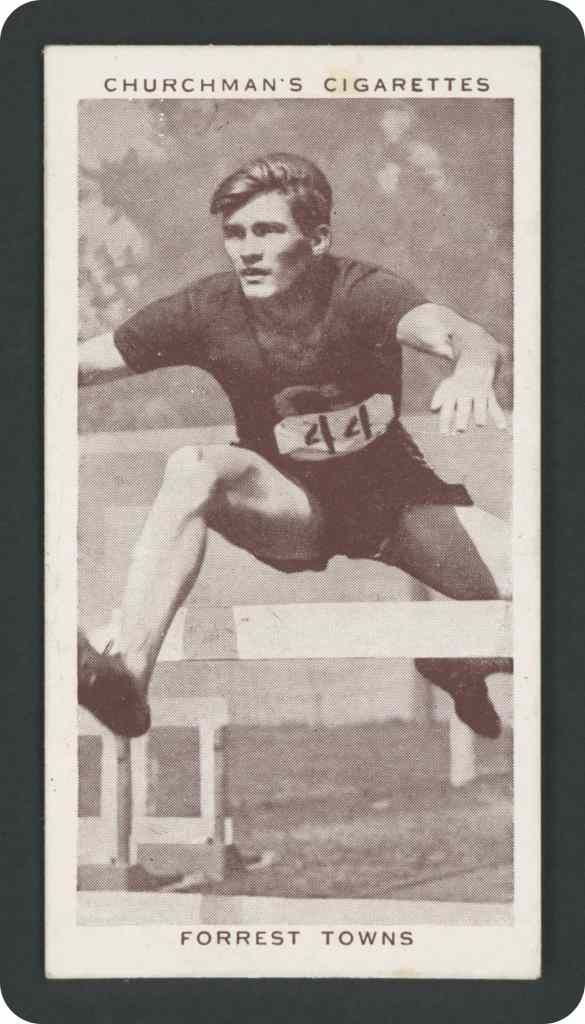
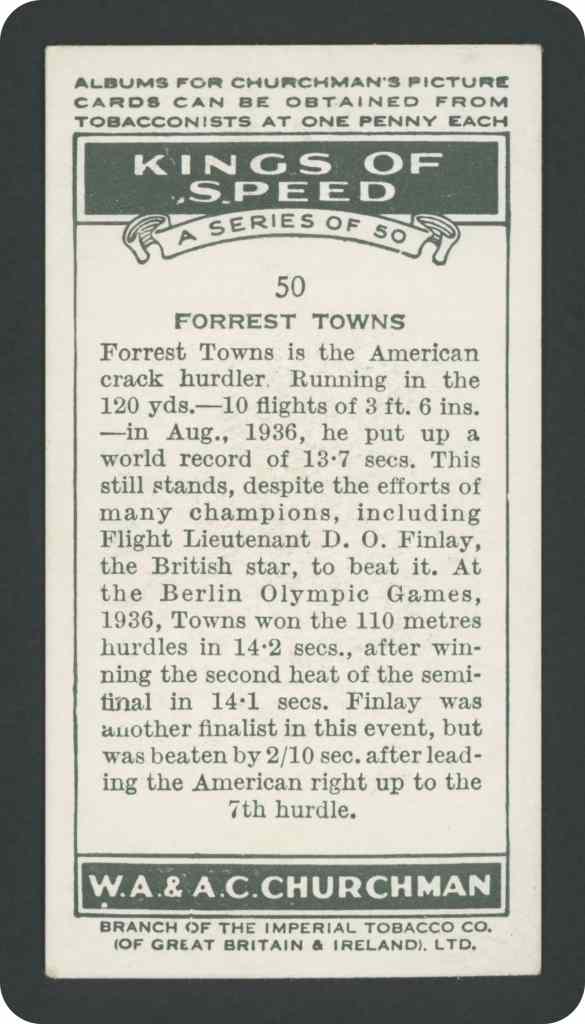
Forrest Towns
Forrest Towns is the American crack hurdler. Running in the 120 yds.–10 flights of 3 ft. 6 ins. -in Aug., 1936, he put up a world record of 13•7 secs. This still stands, despite the efforts of many champions, including Flight Lieutenant D. O. Finlay, the British star, to beat it. At the Berlin Olympic Games, 1936, Towns won the 110 metres hurdles in 14•2 secs., after winning the second heat of the semifinal in 14°1 secs. Finlay was another finalist in this event, but was beaten by 2/10 sec. after leading the American right up to the 7th hurdle.
No Variations
No Error Cards Reported
 Marshall Hills
Leave a comment